
Introduction to Supply Chain Performance and Risk Dashboard
What Is a Supply Chain Performance & Risk Dashboard and Why It Matters
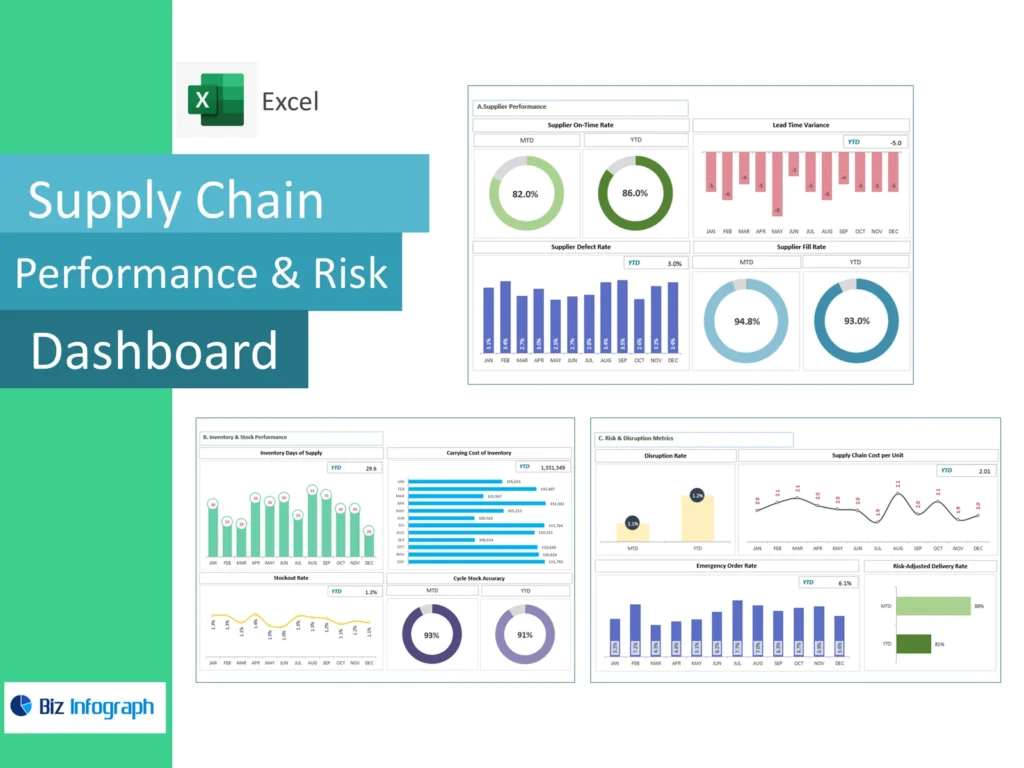
A Supply Chain Performance & Risk Dashboard is a reporting tool that helps businesses monitor service, inventory, suppliers, and operational exposure in one place. A strong supply chain dashboard turns operational data into a clear management view so teams can understand what is happening across sourcing, fulfillment, and delivery. This matters because supply chains are affected by delays, shortages, and supplier issues that can quickly disrupt operations. A good dashboard improves supply chain visibility, helps teams react faster, and supports stronger control over both daily execution and broader risk management across the network.
How a Supply Chain Dashboard Supports KPI Tracking, Risk Visibility, and Operational Control
A strong dashboard helps users track performance by combining supply chain kpis, operational exceptions, and risk signals into one report. This supports better operational control because users can see where service is strong, where stock pressure is rising, and where supplier or logistics risk is building. Better KPI tracking also makes risk easier to understand because the dashboard connects disruption signals to business outcomes. When a business can review both performance and exposure in one structured view, it becomes easier to maintain a more responsive supply chain and act sooner when problems emerge.
Why Businesses Use a Supply Chain Performance & Risk Dashboard Template
Many businesses use a Supply Chain Performance & Risk Dashboard template because it gives them a repeatable structure for tracking logistics, inventory, and risk-related KPIs. A strong template saves time by organizing the report into summary cards, trend views, and operational analysis pages without requiring a full redesign every cycle. It also improves reporting consistency and makes it easier to compare periods or sites. For teams that need regular supply chain review, a reusable template helps create stronger discipline around reporting and supports faster, more dependable operational analysis.
Core Benefits of Supply Chain Performance & Risk Dashboard
Improving Supply Chain Visibility with a Performance Dashboard
A strong performance dashboard improves visibility by bringing the most important service, inventory, and supplier information into one place. This gives users a clearer view of what is happening across sourcing, warehousing, and fulfillment. Better visibility is essential because many problems begin as small delays or imbalances before they become larger disruptions. A dashboard helps teams detect those patterns earlier. When the business improves supply chain visibility, it can respond faster, reduce service failures, and build a more successful supply chain that supports stronger execution across the full operation.
How Supply Chain Risk Management Supports Better Operational Decisions
Good supply chain risk management improves decisions because it helps businesses identify where disruption is most likely and how it may affect service, cost, or inventory. A dashboard makes this easier by connecting risk signals to actual operating measures. This supports more proactive risk management because teams can act before issues become serious. Better risk reporting also helps leadership decide where to strengthen suppliers, stock buffers, or planning assumptions. When supply chain risk is visible and measurable, the business can make better day-to-day and strategic decisions with more confidence and control.
Using BI and KPI Reporting for Stronger Supply Chain Management
BI and KPI reporting improve supply chain management by turning large amounts of supply chain data into a format that is easier to understand and use. A dashboard can summarize service, stock, fulfillment, and supplier trends while still allowing more detailed review when needed. This gives managers and supply chain analysts stronger decision support and improves reporting consistency across teams. Better KPI reporting also helps the organization stay focused on outcomes that matter most. When information is structured well, management becomes faster, clearer, and more effective across the full supply chain.
Key Metrics in a Supply Chain Performance & Risk Dashboard
Essential Supply Chain KPIs Every Business Should Track
Every Supply Chain Performance & Risk Dashboard should include the key performance indicators that define service and control clearly. These often include on-time delivery, order completion, fill rate, inventory turnover, lead time, and selected supplier measures. These key metrics form the foundation of a useful supply chain kpi report because they help businesses see whether operations are stable or under pressure. A strong dashboard keeps these measures visible and easy to interpret. Clear KPI tracking helps users understand where performance is improving and where operational attention is needed most.
Measuring On-Time Delivery, Cycle Time, Lead Time, and Perfect Order Rate
A good dashboard should clearly measure on-time delivery, cycle time, lead time, and perfect order rate because these are core indicators of service quality and operational reliability. Together, these metrics show whether orders are being fulfilled efficiently and whether the supply chain is keeping pace with demand. They also help users understand where delays are forming and which steps in the process are causing slowdown. Better measurement of these service indicators helps teams improve execution, reduce avoidable delays, and strengthen consistency across fulfillment and distribution activities.
Tracking Fill Rate, Inventory Turnover, Cost Per Unit, and Days of Inventory
A strong supply chain report should also track fill rate, inventory turnover, cost per unit, and days of inventory because these measures connect service with cost and stock efficiency. These metrics help teams understand whether inventory is too high, too low, or moving at the right pace. They also show how much working capital and storage burden the business is carrying. Better reporting on these metrics supports stronger inventory control, helps reduce storage costs, and improves the ability to balance customer service with a more efficient supply chain structure.
Supplier and Risk Monitoring in a Supply Chain Dashboard
Using Supplier Performance Views to Monitor Supplier Quality and Delivery Performance
A useful dashboard should include strong supplier views so the business can monitor supplier quality, delivery performance, and operational consistency across vendors. These supplier performance metrics help teams understand whether vendors are meeting expectations and where performance is weakening. This is important because suppliers influence lead time, stock reliability, and customer service. Better supplier visibility also helps businesses decide where to strengthen relationships, improve contracts, or diversify sources. A clear dashboard makes supplier evaluation more practical and helps the organization improve supply reliability over time.
How Supply Chain Risk Reporting Helps Identify Bottlenecks and Control Disruption
Risk reporting is valuable because it helps teams identify bottlenecks before they create broader service failures. A dashboard can highlight repeated delays, inventory imbalances, warehouse slowdowns, or supplier issues that threaten continuity. This kind of reporting improves disruption control because it gives managers earlier warning and a clearer basis for action. Better risk visibility also supports supply chain resilience by helping the organization prepare for pressure points instead of only reacting to them. When the dashboard shows where operational stress is building, the business can respond more effectively.
Measuring Cash-to-Cash Cycle Time and Other Key Risk-Linked Metrics
A strong dashboard should also track cash-to-cash cycle time and other indicators linked to supply risk and capital efficiency. This metric helps businesses understand how quickly cash moves through purchasing, inventory holding, and sales collection. Alongside days of inventory, service KPIs, and supplier performance views, it gives a fuller picture of operational exposure. Better measurement of these risk-linked indicators helps the business connect supply chain decisions to working capital and service outcomes. That creates stronger operational awareness and improves both financial and supply performance review.
Supply Chain Performance & Risk Dashboard Features
How Supply Chain Performance & Risk Dashboard Excel Supports Reporting
A Supply Chain Performance & Risk Dashboard Excel workflow is useful because many businesses still export operational data into spreadsheets for reporting and review. Excel can support KPI tracking, service summaries, and site-level reporting in a familiar format. It is especially practical for smaller teams or businesses building reporting maturity over time. When structured well, Excel-based dashboards can still provide useful visibility into service, inventory, and risk patterns. They also provide a practical base for businesses that want stronger reporting without fully changing their current operational workflow.
Building Better Reports with Metric Views, KPI Layout, and Dashboard Design
Strong dashboard design matters because users need to understand performance and risk quickly. A good report should start with KPI cards for the most important supply chain metrics, then move into trend and exception views for deeper analysis. Clear metric layout helps teams focus on the signals that matter most, such as service reliability, stock pressure, and supplier issues. Better design improves usability and makes the report more practical in meetings and daily management review. When the dashboard is easy to read, it becomes much more valuable as an operational tool.
Why a Supply Chain Performance & Risk Dashboard Template Saves Time and Improves Accuracy
A reusable Supply Chain Performance & Risk Dashboard template saves time because users can refresh current data instead of redesigning the report each cycle. It also improves accuracy because KPI logic, layout structure, and category definitions remain consistent across periods. This reduces manual errors and supports more reliable comparison across locations or weeks. For businesses that need recurring operations review, templates provide a practical reporting advantage. They help standardize performance monitoring and improve how quickly teams can move from data to decision-making across supply chain functions.
Practical Use Cases for Supply Chain Performance & Risk Dashboard
Using a Supply Chain Dashboard for Daily Performance Monitoring and Operational Review
A strong supply chain dashboard is especially useful for daily monitoring because operations can shift quickly with changes in orders, stock, or supplier performance. A daily dashboard can show service level, inventory pressure, open issues, and warehouse or transport performance in one place. This helps managers react sooner and maintain better control over execution. Better daily review also strengthens coordination across functions such as warehouse management, procurement, and fulfillment. When teams can see performance clearly each day, they can keep the operation more stable and service more reliable.
How a Performance Dashboard Supports Better Supplier and Inventory Decisions
A good performance dashboard helps teams make better supplier and inventory decisions by showing service quality, inventory flow, and risk indicators together. It can reveal whether certain suppliers are affecting service, whether stock levels are too high or too low, and where the business may need stronger replenishment planning. Better combined visibility improves coordination between sourcing and operations and supports more balanced decisions. This helps the organization improve service while controlling cost and inventory exposure. Stronger dashboard reporting also helps maintain a more responsive supply chain under changing demand conditions.
Connecting Supply Chain KPIs with Sales Performance and Business Outcomes
A useful dashboard should connect supply chain kpis with sales performance and broader business results. This matters because supply problems often affect customer availability, revenue, and service quality. If order fill rate drops or lead times increase, sales may be lost or customer satisfaction may weaken. By showing these relationships clearly, the dashboard helps the business understand why operational performance matters. Better connection between operations and outcomes supports more meaningful management review and helps leadership make decisions that balance service, cost, and growth more effectively.
Dashboard Design and Practical Value
Learning from Supply Chain Dashboard Examples for Better Reporting Design
Reviewing supply chain dashboard examples is one of the best ways to improve reporting design. Good examples show how to organize KPI summaries, supplier views, inventory trends, and service indicators in a way that is easy to review. They also help teams avoid clutter and choose the right level of detail for different users. Learning from proven dashboard structures reduces design mistakes and makes the final report more practical. This helps businesses create dashboards that are not only informative, but also easier to use in daily and executive operational review.
Creating Clear KPI Views for Supply Chain Performance and Risk Analysis
A good dashboard should present KPI views in a way that supports both quick review and deeper analysis. Summary cards should show the most important service, stock, and supplier signals first, while supporting visuals explain trends and issues below. This clear structure helps users understand whether operations are stable or under pressure. It also makes risk analysis easier by highlighting where performance is drifting. Better KPI views improve communication, reduce confusion, and help the organization act faster on problems affecting service or efficiency.
Adapting a Supply Chain Performance & Risk Dashboard Template to Business Needs
Every business has different supply priorities, so the dashboard should be flexible enough to reflect those needs. Some may focus more on supplier performance, others on inventory reliability, transport service, or cost efficiency. A strong Supply Chain Performance & Risk Dashboard template can be adapted to those priorities without losing its core KPI structure. This makes the report more relevant and more useful in practice. Better customization helps ensure the dashboard answers the questions managers and leaders actually need answered and supports stronger operational alignment.
Conclusion
Why a Supply Chain Performance & Risk Dashboard Template Is a Practical Reporting Tool
A Supply Chain Performance & Risk Dashboard template is practical because it combines structure, speed, and consistency in one reporting solution. It helps businesses standardize KPI review, reduce repetitive report-building work, and compare supply performance more reliably across time or sites. Templates also improve reporting quality by keeping the same logic and layout in place. For organizations that need regular operational review, a template-based dashboard is one of the most efficient ways to support better supply chain management and more dependable decision-making.
Final Thoughts on Using a Supply Chain Performance & Risk Dashboard for KPI Metric Tracking, Risk Visibility, and Operational Control
A well-designed Supply Chain Performance & Risk Dashboard helps organizations turn operational data into actionable insight. It improves KPI visibility, strengthens risk awareness, and supports better day-to-day control across supply operations. By making service, supplier, and inventory issues easier to understand, the dashboard helps businesses improve supply chain resilience, reduce disruption, and maintain stronger execution. Better reporting leads to better control, and better control supports a more successful supply chain that can respond faster, perform more reliably, and serve customers more effectively.
For ready-to-use Dashboard Templates: