
What is an HR Financial Services Sector Dashboard?
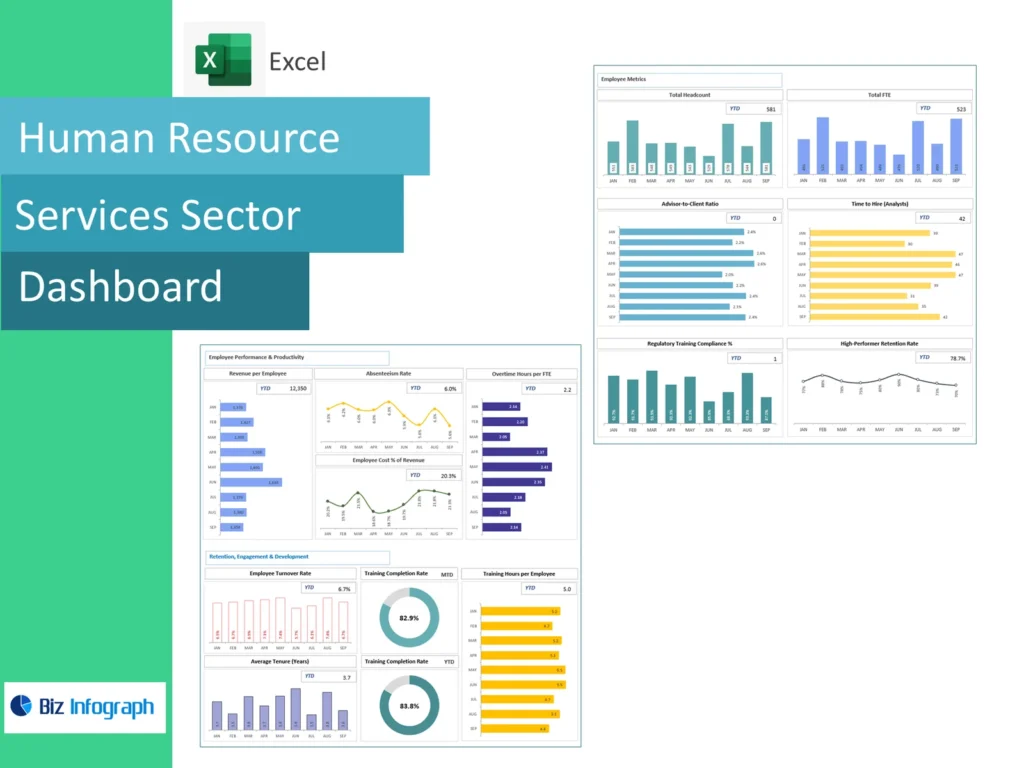
How the dashboard supports HR strategy across the financial services industry
An HR Financial Services Sector Dashboard is a comprehensive hr tool that gives hr teams in financial services a single, data-driven view of workforce performance, wellbeing, and compliance. Rather than pulling information from disconnected hr systems, hr departments can track employee performance, monitor regulatory compliance, and measure progress against business goals in one place. For financial services companies operating across multiple business units, this unified approach to hr strategy is what allows senior managers and hr leaders to make confident, evidence-based decisions about their people.
Why HR in financial services demands a dedicated industry HR dashboard
HR in financial services operates under pressures that most other sectors do not face at the same intensity — strict regulatory requirements, intense performance expectations, and constant market volatility. A generic dashboard cannot account for these dynamics. Industry hr tools built specifically for the finance sector incorporate people analytics tailored to investment management and banking environments, surfacing the hr challenges in financial services that matter most, from workforce management gaps to employee wellbeing risks that signal burnout before it affects business outcomes.
Top HR challenges in financial services and how the dashboard addresses them
Closing the skills gap in the finance industry through data-driven HR teams
Among the top hr challenges facing financial services, the skills gap is the one that CEOs and business leaders consistently rank as most urgent. As automation reshapes back-office functions and digital skills become central to every finance role, hr financial services teams must address skills gaps systematically rather than reactively. The HR Financial Services Sector Dashboard tracks training completion, development opportunities taken up, and skills coverage by team, giving hr departments the data they need to prioritise learning investment and protect the digital capabilities the finance industry increasingly depends on.
Digital transformation challenges for financial services HR teams and how dashboards help
Digital transformation is one of the most significant challenges facing financial services hr functions today. Upgrading hr systems, rolling out mobile apps, and supporting hybrid work environments while keeping finance professionals productive is a complex balancing act. The HR Financial Services Sector Dashboard brings together data visualization of adoption rates, engagement with new tools, and remote work patterns, helping managers and leaders see where transformation efforts are gaining traction and where additional support is needed to bring the wider workforce along.
Using AI to tackle HR challenges in financial services at scale
AI is changing how hr teams in financial services approach everything from hr and recruitment to employee performance management. Embedded within the HR Financial Services Sector Dashboard, AI-powered people analytics can flag employees at risk of leaving, identify burnout signals in high-pressure teams, and surface patterns in absenteeism before they escalate. For financial services firms managing large workforces under economic uncertainty, this kind of proactive, data-driven capability transforms hr functions from reactive administrators into strategic partners who protect top talent and strengthen business outcomes.
HR Financial Services Sector Dashboard template: how to get started
Choosing a dashboard template aligned to financial services HR strategy and goals
Selecting the right HR Financial Services Sector Dashboard template starts with mapping your hr strategy to the specific challenges facing financial services in your organisation. A template for a retail banking hr team will prioritise different metrics than one built for investment management. Look for templates that accommodate regulatory compliance tracking, flexible working data, and employee wellbeing initiatives alongside standard performance metrics — ensuring the dashboard reflects the full scope of industry hr responsibilities rather than a generic set of workforce management fields that miss the nuances of the finance sector.
How HR teams in the finance industry can customise templates to track skills gap progress
A good HR Financial Services Sector Dashboard template is a starting point, not a finished product. HR teams in financial services should customise their template to include skills gap tracking by role, development opportunities by department, and GDPR-compliant data fields for employee records. Adding views for hybrid work environments and remote work participation rates also helps senior managers monitor how workforce management is adapting to post-pandemic working patterns across business units in the finance industry.
HR Financial Services Sector Dashboard Excel: building it in a spreadsheet
Setting up an Excel dashboard for financial services HR tracking and reporting
An HR Financial Services Sector Dashboard Excel file gives smaller financial services companies a practical entry point for tracking hr challenges without a dedicated platform. Structure your spreadsheet with tabs for employee performance, regulatory compliance status, employee wellbeing survey results, and flexible working adoption. Use data visualization through charts and conditional formatting to make workforce management trends readable for senior managers who do not have time to interpret raw numbers. This approach supports basic industry hr reporting while the organisation builds toward a fully connected dashboard solution.
When to move from Excel to a dedicated financial services HR dashboard
Excel becomes a liability for hr in financial services once headcount grows or the organisation spans multiple business units. Manual updates introduce errors, GDPR data handling becomes harder to control, and the ability to surface real-time risk of leaving signals disappears entirely. A dedicated HR Financial Services Sector Dashboard connects live hr systems, automates compliance tracking, and gives hr departments instant access to people analytics across the finance sector — allowing hr functions to respond to economic uncertainty and performance expectations with speed and accuracy that a spreadsheet cannot match.
How the HR Financial Services Sector Dashboard enhances employee performance
Linking HR strategy to employee performance outcomes across the finance industry
To enhance employee performance in the finance sector, hr strategy must connect directly to measurable outcomes rather than stopping at policy. The HR Financial Services Sector Dashboard gives hr financial services teams a clear line between wellbeing initiatives, development opportunities, and the employee performance scores that follow. When managers and leaders can see how safety and health programmes reduce absenteeism, or how work-life balance improvements lower the risk of leaving among top talent, they can build an hr strategy that drives sustainable performance rather than short-term output under high-pressure conditions.
Using AI and digital transformation data to drive HR improvements in financial services
AI and automation are reshaping how hr departments in financial services firms measure and respond to employee performance. Embedded within the HR Financial Services Sector Dashboard, AI-driven insights highlight which teams are exceeding performance expectations, which finance professionals are showing early signs of disengagement, and where digital skills development is accelerating productivity. This data-driven approach to managing the employee experience helps hr teams in financial services move beyond annual reviews and deliver continuous, targeted support that aligns individual development with broader business goals.
Best practices for HR teams using the HR Financial Services Sector Dashboard
Keeping financial services HR data accurate for reliable industry HR reporting
Accurate data is the foundation of every reliable HR Financial Services Sector Dashboard. Before hr teams in financial services connect any people analytics platform, they should audit existing hr systems for duplicate records, inconsistent job grade classifications, and outdated GDPR consent flags. Establishing clear data ownership across hr and recruitment, finance professionals, and business units ensures that the dashboard reflects the real state of the workforce. Clean data is what allows CEOs and senior managers to trust the industry hr metrics they see and act on them with confidence.
Scaling your HR dashboard across the financial services sector as HR challenges evolve
As financial services companies grow and hr challenges in financial services evolve, the HR Financial Services Sector Dashboard should grow with them. Start with core workforce management and employee performance tracking, then layer in burnout monitoring, flexible working analytics, and market volatility response planning as the organisation matures. Adding mobile apps access for managers and leaders ensures the dashboard is usable across hybrid work environments, keeping comprehensive hr oversight intact whether teams are working in-office, remotely, or across multiple locations in the finance sector.
For ready-to-use Dashboard Templates: