
Introduction to Logistics Operations and Efficiency Dashboard
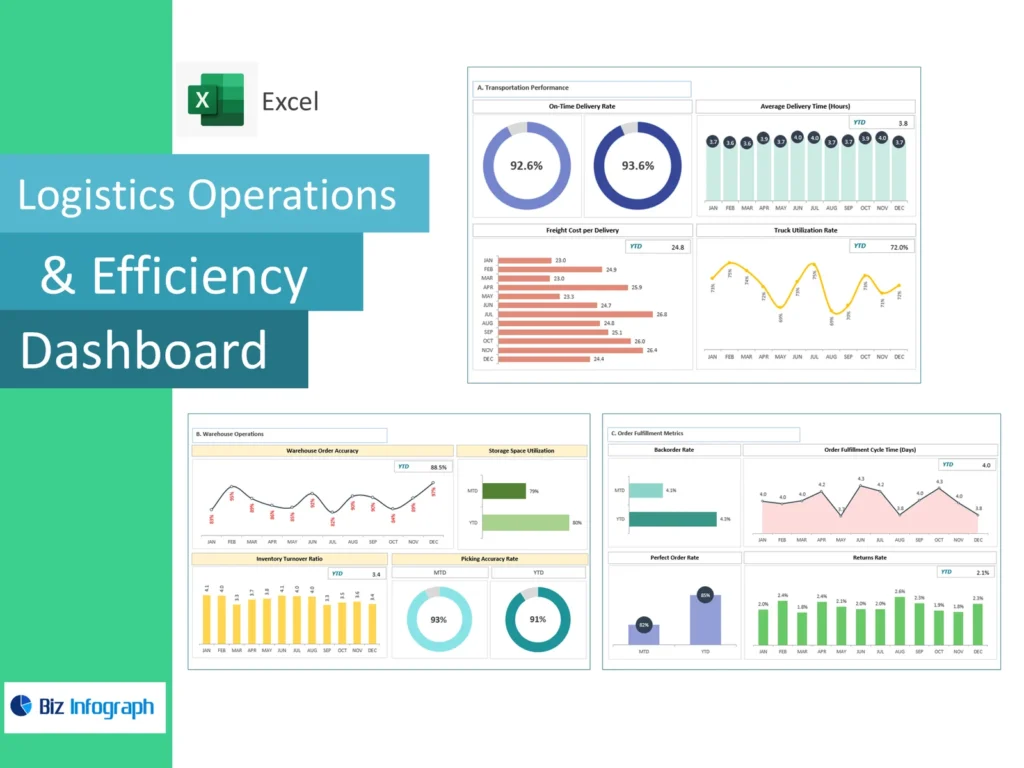
What Is a Logistics Operations and Efficiency Dashboard and Why It Matters
A Logistics Operations and Efficiency Dashboard is a reporting tool designed to help businesses monitor shipment flow, transport performance, inventory movement, and operational effectiveness in one place. In modern logistics and supply chain environments, teams need faster visibility into what is happening across fulfillment, transportation, and planning. A strong dashboard creates that visibility. It helps managers understand delays, bottlenecks, and service performance more clearly. This matters because better reporting supports faster response, stronger supply chain control, and more reliable execution across a complex supply chain that depends on speed, coordination, and accuracy.
How a Logistics Dashboard Supports Supply Chain Efficiency and Operations Monitoring
A strong logistics dashboard for supply chain reporting supports operations monitoring by connecting transport, warehousing, order flow, and delivery performance into one structure. This helps teams review what is happening throughout the day and respond more quickly when performance changes. Better monitoring also supports stronger supply chain efficiency because users can identify delays, resource pressure, and route problems earlier. A clear dashboard gives teams a stronger view of the supply chain and helps them coordinate more effectively. When performance is monitored well, the business can improve execution and strengthen service outcomes.
Why Businesses Use a Logistics Operations and Efficiency Dashboard Template
Many organizations use a Logistics Operations and Efficiency Dashboard template because it provides a repeatable format for recurring performance review. A strong template can include KPI summaries, transport metrics, warehouse views, and operational trend charts without requiring teams to rebuild the same report every time. This improves reporting speed and consistency. It also helps standardize the way the business reviews logistics performance across teams or regions. For organizations managing multiple routes, facilities, or service lines, a reusable dashboard template is a practical way to support stronger oversight and better operational discipline.
Core Benefits of Logistics Operations and Efficiency Dashboard
Improving Supply Chain Visibility with a Dashboard for Supply Chain
A strong dashboard for supply chain reporting improves visibility by showing the most important operational signals in one place. It helps businesses track deliveries, stock movement, fulfillment status, and resource efficiency without switching across separate files or systems. Better visibility matters because many supply chain challenges begin with poor awareness of what is happening in real time. A dashboard helps teams identify delays and performance issues earlier. When visibility improves, the organization gains stronger alignment across the entire supply chain and is better positioned to improve reliability, planning, and service quality.
How Logistics Performance Reporting Supports Better Supply Chain Management
Good reporting supports stronger supply chain management because it helps teams understand whether logistics execution is meeting expectations. A dashboard can show transport results, warehouse activity, service levels, and exception patterns in one place. This makes it easier to manage priorities and address issues before they grow. Better logistics performance reporting also helps managers compare sites, routes, or operational units more consistently. When the report is structured well, teams can respond faster and improve coordination. This creates stronger control over daily operations and better support for long-term efficiency goals.
Using Real-Time Performance Analysis to Address Supply Chain Challenges
Real-time analysis is essential in logistics because conditions can change quickly through delays, disruptions, or demand spikes. A dashboard that provides real-time supply chain insights helps users react faster to service issues and maintain operational flow. This is especially useful in global supply chains and other complex environments where one disruption can affect many downstream activities. Better real-time reporting helps the business respond to different supply chain conditions with more confidence. It also strengthens execution by showing which issues need immediate attention and which trends require longer-term process improvement.
Key Metrics in a Logistics Operations and Efficiency Dashboard
Essential Key Metrics Every Logistics and Supply Chain Business Should Track
Every Logistics Operations and Efficiency Dashboard should include the key metrics that define performance clearly. These may include on-time delivery, transport cycle time, order fill rate, stock availability, route productivity, freight utilization, and issue resolution time. These are the key supply chain measures that help businesses understand whether operations are running smoothly. A strong kpi dashboard should make these measures easy to review and compare. Clear KPI reporting supports better daily decision-making and gives managers a stronger basis for improving operational performance across the logistics network.
Measuring Logistics Performance, Supply Chain Efficiency, and Operational Results
A strong dashboard should measure logistics performance, supply chain efficiency, and practical operational outcomes together. These may include shipment lead time, delivery efficiency, handling productivity, transport cost, and delay patterns. Strong reporting should also help users review overall logistics efficiency and see how individual processes affect the broader system. This matters because logistics is not just about movement. It is about consistent and efficient execution. Better performance measurement helps businesses identify weak areas, improve process design, and create a more efficient supply chain that supports service and profitability.
Using Logistics Data and Key Supply Chain KPIs for Better Decision-Making
A good dashboard turns logistics data and supply chain data into something useful for managers and analysts. It helps users move from operational numbers to action by making patterns easier to see and compare. This is valuable because better data supports better decisions about delivery flow, warehouse priorities, carrier performance, and planning assumptions. A dashboard that organizes KPI data clearly becomes much more than a report. It becomes a practical decision tool that helps the business respond faster and improve control over the systems that drive logistics and transportation performance.
Logistics Operations and Efficiency Dashboard Features
How Logistics Operations and Efficiency Dashboard Excel Supports Reporting
A Logistics Operations and Efficiency Dashboard Excel workflow is useful because many organizations still rely on spreadsheet-based operational summaries. Excel can help teams collect transport results, stock movement, and service data into a form that is easier to review and share. This is especially practical for smaller teams or early-stage reporting processes. It can also act as a useful base before moving to more advanced tools such as a power bi logistics dashboard. When Excel-based reporting is organized well, it supports useful operational visibility and gives teams a familiar foundation for improving their reporting process.
Building Better Reports with KPI Dashboard and Analytics Dashboard Design
A strong kpi dashboard and analytics dashboard design makes logistics reporting much more useful. Good design should begin with a high-level summary of transport, order, and warehouse performance, followed by deeper operational views below. This makes the report easier to use in both daily meetings and executive review. Better layout also helps users understand the relationship between operational performance and service outcomes. Strong design improves clarity, reduces confusion, and supports better interpretation of logistics trends. When the reporting is clear, the business can focus more on improvement and less on searching for information.
Why a Logistics Operations and Efficiency Dashboard Template Saves Time and Improves Accuracy
A reusable Logistics Operations and Efficiency Dashboard template saves time because teams can refresh the latest data rather than rebuild their report structure each period. It also improves accuracy because the same calculations, KPI definitions, and layout logic are used consistently. This reduces manual errors and makes comparisons more dependable across facilities, routes, or weeks. For organizations that review logistics performance regularly, templates are highly practical. They make reporting more scalable, more reliable, and easier to maintain as operational complexity grows and reporting needs become more frequent.
Supply Chain Reporting and Operational Analysis
Using a Logistics Dashboard for Supply Chain Performance Monitoring
A strong logistics dashboard for supply chain reporting helps businesses monitor service and execution more consistently over time. It can show delivery timing, delay patterns, inventory movement, route output, and exception management in one view. This makes it easier to review supply chain performance and identify where operational weaknesses are forming. Better monitoring helps the business improve resource use, reduce service failures, and align execution more closely with customer expectations. When managers can see performance clearly, they can respond faster and improve consistency across the network.
How a Dashboard for Supply Chain Management Improves Operational Oversight
A good dashboard for supply chain management improves oversight by showing how logistics, inventory, and fulfillment are performing together. This supports better operational control because managers can move from high-level review into detail without waiting for separate reports. Better oversight also helps the business understand where handoffs are failing, where flow is slowing, and where planning assumptions may need updating. This is important at every supply chain management level, from frontline supervision to executive review. Strong oversight leads to better execution, stronger control, and more reliable logistics outcomes.
Supporting Better Decisions with Real-Time Logistics and Supply Chain Insights
Real-time reporting is useful because logistics teams often need to act within hours, not days. A dashboard with real-time supply chain insights helps users identify service risk, route issues, stock imbalances, and operational disruption before those problems create bigger failures. This improves decision-making because teams are not relying on outdated reports. Instead, they work from current performance signals. Better timing supports quicker correction, improves responsiveness, and helps the organization manage logistics and supply chain operations in a more proactive and more controlled way.
Dashboard Design and Practical Use
Learning from Dashboard Examples and Types of Supply Chain Dashboards
Studying dashboard examples, examples of supply chain dashboards, and different types of supply chain dashboards helps teams build stronger reports faster. Good examples show how to arrange KPI summaries, trend sections, warehouse views, and transport insights in a practical order. Understanding the types of dashboards available also helps businesses choose the right format for daily operations, executive oversight, or planning. Learning from proven designs reduces trial and error. It improves usability and helps create dashboards that match the real needs of managers, analysts, and operations teams.
How to Build a Logistics Dashboard for Different Supply Chain Management Levels
To build a logistics dashboard effectively, the design should reflect the needs of different users. Operational teams may need route and warehouse details, while leaders may need summary KPIs and trend signals. This means the dashboard should support more than one level of supply chain management and still remain easy to use. A strong dashboard can serve supervisors, supply chain leaders, and supply chain analysts by balancing summary and detail. Building around user needs improves relevance and makes the report more effective across the organization.
Creating an Effective Logistics Dashboard for Business Needs
An effective logistics dashboard must reflect the actual priorities of the business. One company may focus on route efficiency, another on order fulfillment, another on stock reliability, and another on cross-border logistics. A report that fits these priorities becomes much more useful in practice. This is especially important when implementing logistics dashboards in real operational settings. The dashboard should be designed to answer the questions users ask most often and help them act faster. Good customization makes the reporting more relevant, more actionable, and easier to use every day.
Business Value of Logistics Operations and Efficiency Dashboard
Supporting Better Logistics Industry Decisions with Performance Dashboard Reporting
A strong performance dashboard supports better decisions in the logistics industry because it organizes operational results into a format leaders can actually use. It shows whether service is improving, where delivery problems are growing, and which parts of the network need support. This is useful for strategic and daily decisions alike. Better reporting improves how managers allocate resources, manage partners, and address inefficiencies. It also helps organizations stay more competitive by improving visibility into what is driving performance and what is slowing it down across operations.
Improving Visibility Across Logistics and Supply Chain Operations
A well-built dashboard improves visibility across warehouses, delivery networks, carriers, and fulfillment activities by presenting them together in one structured system. This matters because problems in one area often affect others, especially in a complex supply chain. Better visibility helps users see how operations are connected and where performance risk is increasing. A strong supply chain metrics dashboard or supply chain performance dashboard helps leadership and operations teams work from the same information. This improves coordination and supports more consistent execution throughout the business.
Building a Logistics Dashboard for Supply Chain and Operational Efficiency Goals
A strong dashboard should be built around the goals the business wants to improve. Some organizations may focus on transport reliability, others on warehouse speed, and others on end-to-end service performance. A flexible custom logistics dashboard can support these different priorities while maintaining consistent KPI logic. This helps teams optimize supply chain efficiency, improve process control, and strengthen customer outcomes. Better alignment between reporting and goals improves decision-making and helps businesses turn logistics reporting into a real operational advantage.
Conclusion
Why a Logistics Operations and Efficiency Dashboard Template Is a Practical Reporting Tool
A Logistics Operations and Efficiency Dashboard template is practical because it gives businesses a structured, repeatable way to monitor operational performance. It saves time, improves consistency, and helps teams compare results across facilities, routes, or periods more easily. Templates also make it easier to scale reporting as operations grow. For businesses that rely on regular review of logistics performance, a reusable dashboard template creates a stronger reporting foundation and supports more reliable management action across the logistics and supply chain environment.
Final Thoughts on Using a Logistics Operations and Efficiency Dashboard for Supply Chain Efficiency, Operations Monitoring, and Real-Time Performance Analysis
A well-designed Logistics Operations and Efficiency Dashboard helps organizations understand what is happening across the entire supply chain with greater speed and clarity. It strengthens performance review, improves oversight, and supports more effective daily response to issues. By turning operational data into clear insight, the dashboard helps businesses streamline operations, improve service, and react faster to the changing demands of a modern supply chain. Better reporting leads to better execution, stronger efficiency and customer satisfaction, and more confident logistics management overall.
For ready-to-use Dashboard Templates: