
Introduction to HR Budget vs Actual Dashboard
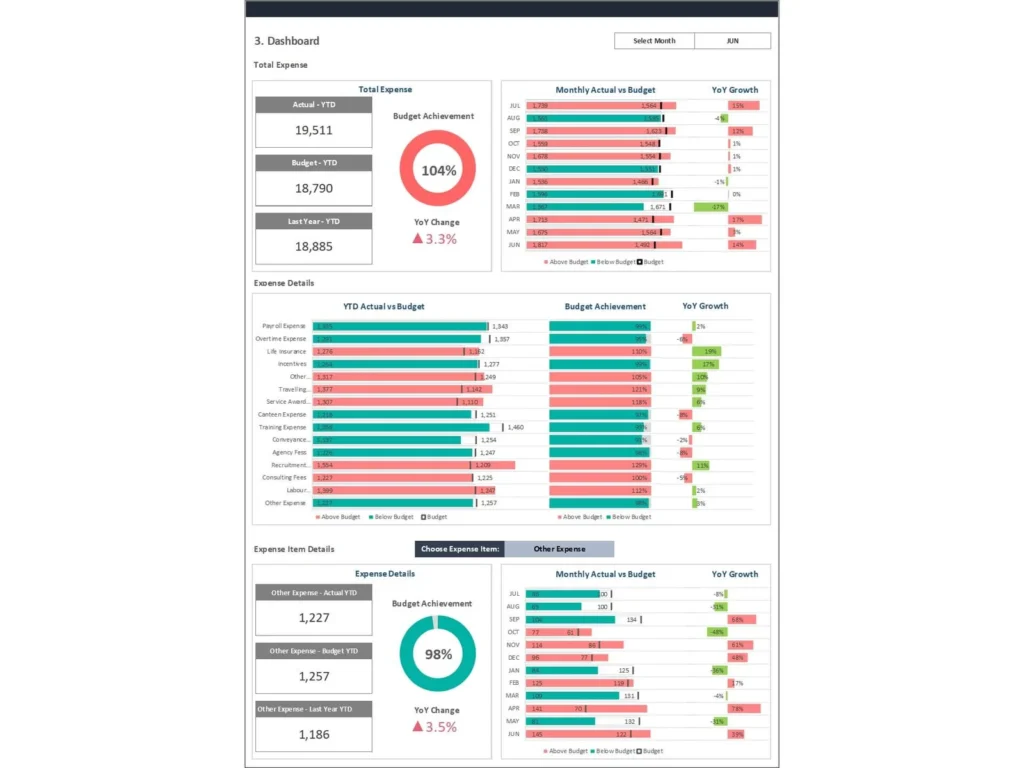
What Is an HR Budget vs Actual Dashboard in Modern HR and Finance Management
An HR Budget vs Actual Dashboard is a specialized HR dashboard designed to compare budgeted and actual HR costs in a structured and visual format. It allows HR teams, finance professionals, and department heads to monitor HR spending and analyze whether HR operations remain within planned financial targets. In modern organizations, dashboards help transform complex payroll and workforce cost data into visually clear insights that support better decision-making.
This dashboard typically compares budgeted and actual costs across different HR categories such as payroll, recruitment expenses, training costs, and employee benefits. By organizing these categories into a structured metrics dashboard, organizations can analyze financial performance monthly and monitor cost trends over time. The dashboard helps managers quickly identify areas where actuals exceed planned budgets.
Using BI tools and integrated accounting systems, organizations can integrate HR financial data into one centralized dashboard. This enables HR leaders to analyze workforce costs visually and ensure consistent financial control across the HR department. A robust HR Budget vs Actual Dashboard provides transparency and precision in HR financial management, ensuring HR initiatives align with overall financial strategy.
Why Organizations Use HR Budget vs Actual Dashboard Excel and Dashboard Templates
Organizations often rely on HR Budget vs Actual Dashboard Excel tools and templates because they provide a customizable and flexible solution for managing HR financial data. An HR Budget vs Actual Dashboard template allows HR managers to structure financial information in a sheet that tracks budgeted values, actuals, and variances for different HR cost categories.
Excel dashboards allow organizations to define budget assumptions and compare budget vs actual expenses across departments. These dashboards are customizable, allowing HR teams to tailor the dashboard to specific HR needs such as payroll analysis, recruitment spending, and training budgets. The template also enables HR professionals to filter data by department, cost category, or monthly reporting cycle.
A well-designed HR dashboard template helps ensure accuracy and consistency in financial reporting. It allows HR teams to validate financial data, compare spending trends, and maintain transparency in HR operations. These dashboards also integrate easily with accounting systems, enabling organizations to track workforce costs more effectively.
Role of HR Dashboard in Budget Monitoring, Cost Control, and Financial Analysis
An HR dashboard plays a critical role in monitoring HR budgets and controlling workforce costs. The HR Budget vs Actual Dashboard allows HR managers and finance teams to analyze HR expenses and compare budgeted and actual values in real time.
Cost control is one of the primary objectives of this dashboard. By identifying variances between budgeted and actual HR spending, organizations can quickly respond to financial deviations and implement corrective actions. For example, if payroll costs exceed the defined threshold, HR managers can investigate the cause and adjust workforce planning strategies.
The dashboard also supports financial analysis by visualizing spending trends across different HR categories. Charts and BI tools within the dashboard enable HR professionals to analyze monthly performance and identify patterns that affect HR financial outcomes. This level of financial transparency helps organizations maintain consistent budget control and improve HR financial management.
Key Components of an HR Budget vs Actual Dashboard
Understanding Budget vs Actual Dashboard Structure and Financial Categories
A well-designed HR Budget vs Actual Dashboard includes several key structural elements that organize financial data into meaningful insights. The dashboard structure typically includes budgeted amounts, actual HR expenses, and calculated variance values for each cost category.
Financial categories within the dashboard may include payroll costs, recruitment expenses, employee benefits, training programs, and HR technology investments. These categories help HR managers analyze how resources are allocated and whether spending aligns with budget assumptions.
Each category within the dashboard provides a dimension for analyzing HR financial performance. By structuring the dashboard into clear financial categories, HR teams can evaluate budget utilization across multiple departments. This structured approach allows organizations to monitor spending with greater precision and ensure financial resources are managed efficiently.
Tracking HR Cost Categories and Workforce Finance Metrics
Tracking HR cost categories is a fundamental function of the HR Budget vs Actual Dashboard. Each category represents a specific type of HR expense that contributes to overall workforce costs. For example, payroll is typically the largest HR cost category and requires continuous monitoring.
The dashboard allows HR professionals to analyze financial metrics such as payroll expenses, recruitment costs, training budgets, and employee benefit programs. By comparing budgeted and actual values for each category, organizations can identify areas where costs deviate from expectations.
Using BI and data analytics tools, HR managers can also monitor trends across multiple reporting cycles. This analysis helps organizations evaluate whether HR spending patterns are consistent or require adjustments. Tracking these financial metrics ensures HR teams maintain financial discipline and manage workforce costs effectively.
Importance of Variance Analysis in HR Budget vs Actual Dashboard
Variance analysis is one of the most valuable features of the HR Budget vs Actual Dashboard. Variance represents the difference between budgeted HR expenses and actual spending. This analysis helps HR managers understand whether financial outcomes align with planning assumptions.
Positive or negative variances can reveal important insights about HR operations. For example, higher-than-expected payroll expenses may indicate workforce growth, overtime costs, or changes in compensation structures. Conversely, lower recruitment costs may reflect improved hiring efficiency.
The dashboard visually highlights variances using charts and graphical indicators. These visualizations help HR leaders quickly identify financial discrepancies and investigate the underlying causes. By continuously analyzing variance data, organizations can improve budget forecasting accuracy and maintain better financial control.
Using BI and Analytics in HR Budget vs Actual Dashboard
How BI Tools Improve HR Budget Monitoring and Financial Insights
Business intelligence tools enhance the capabilities of an HR Budget vs Actual Dashboard by enabling deeper financial analysis. BI platforms allow organizations to integrate HR financial data from multiple sources and generate interactive dashboards that provide comprehensive insights.
BI tools allow HR managers to analyze financial data across different dimensions such as department, cost category, or time period. These dashboards help HR leaders track budget performance monthly and evaluate workforce spending trends.
The integration of BI tools with HR dashboards also improves reporting accuracy. By automating data collection from accounting systems and payroll platforms, BI dashboards ensure financial information remains consistent and up to date.
Comparing Budget and Actual HR Costs with Analytics and Reporting
One of the most valuable functions of an HR Budget vs Actual Dashboard is the ability to compare budget vs actual HR costs through advanced analytics. This comparison enables HR managers to evaluate financial performance across different cost categories.
Analytics tools allow HR teams to filter and analyze financial data based on multiple criteria. For example, HR managers may compare payroll spending across departments or analyze recruitment expenses over multiple months.
By using analytics and reporting features within the dashboard, organizations can identify cost trends and evaluate financial outcomes more effectively. This analysis helps HR teams adjust budget assumptions and improve financial planning strategies.
Using Charts and Visual Analytics in an HR Dashboard
Charts and visual analytics play a crucial role in making HR financial data easier to understand. An HR Budget vs Actual Dashboard often includes charts that display spending trends, budget utilization, and variance analysis.
These charts allow HR managers to visualize how actual HR costs compare with budgeted values. Visual indicators such as bar charts, line graphs, and variance charts make it easier to identify patterns and financial anomalies.
By presenting HR financial data visually, dashboards enable faster decision-making and improve communication between HR and finance teams. Visual analytics ensures HR professionals can quickly interpret financial results and take appropriate action.
HR Budget vs Actual Dashboard Examples and Use Cases
HR Budget vs Actual Dashboard Example for Workforce Cost Management
An HR Budget vs Actual Dashboard example for workforce cost management focuses on tracking payroll and workforce-related expenses. Payroll represents one of the largest HR costs, and monitoring these expenses is essential for maintaining financial discipline.
The dashboard allows HR teams to compare budgeted payroll expenses with actual payroll data collected from accounting systems. By analyzing this data, HR managers can identify cost trends and evaluate workforce planning decisions.
This type of dashboard helps HR leaders maintain transparency in workforce cost management and ensure HR spending remains aligned with financial objectives.
Budget vs Actual Dashboard Example for HR Department Financial Control
Another example of an HR Budget vs Actual Dashboard focuses on overall HR department financial control. This dashboard tracks multiple HR cost categories such as recruitment, training, benefits, and HR technology investments.
Department heads use the dashboard to evaluate financial performance and ensure HR spending aligns with organizational budgets. By comparing budget vs actual values across departments, organizations can identify cost overruns and adjust financial strategies accordingly.
This dashboard helps HR teams maintain financial accountability and improve budget planning accuracy.
Chart-Based HR Dashboard Example for Variance and Cost Analysis
A chart-based HR Budget vs Actual Dashboard provides a visual representation of financial variances. Charts display budgeted and actual HR expenses across different categories, enabling HR leaders to analyze spending patterns quickly.
These dashboards highlight areas where actual HR costs exceed predefined thresholds. Visual indicators make it easier to identify financial risks and implement corrective actions.
Chart-based dashboards improve transparency and ensure HR teams can analyze financial outcomes more effectively.
For ready-to-use Dashboard Templates: