
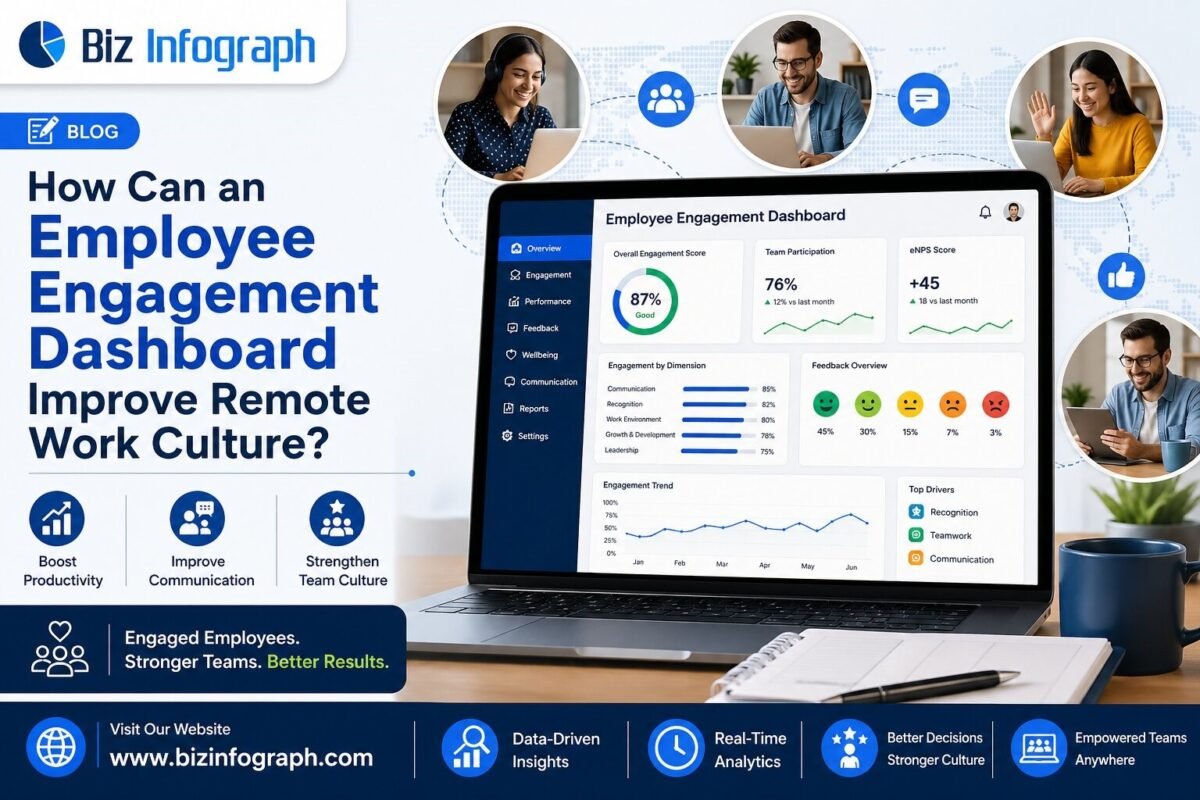
Remote work has changed the game for many businesses. People can work from home, coffee shops, or even while traveling. Sounds pretty awesome, right? But here’s the catch. Remote work can sometimes make employees feel lonely, left out, or confused. Without office chats or quick team huddles, company culture can take a hit. That is why an employee engagement dashboard can be such a big help. It gives businesses a clear view of how employees feel, work, and connect, even from miles away.
Why Remote Work Can Feel Like a Mixed Bag
Working remotely has perks. No traffic jams. More comfy clothes. Flexible hours. Still, it is not always sunshine and rainbows.
Remote teams often face:
-
- Poor communication
-
- Feeling isolated
-
- Burnout
-
- Low motivation
-
- Less teamwork
When employees feel disconnected, productivity can drop fast. That is where tracking engagement becomes super important.
What Is an Employee Engagement Dashboard Anyway?
Think of an employee engagement dashboard like a report card for workplace happiness. It is a tool that shows important data about how employees are doing. This can include job satisfaction, feedback, productivity, and communication.
Common things it tracks:
| Metric | What It Shows? |
| Satisfaction Scores | How happy employees feel |
| Productivity Rates | How work is getting done |
| Survey Results | Employee opinions |
| Attendance | Meeting and work activity |
| Communication Trends | Team interaction levels |
This dashboard helps leaders spot problems early before they snowball.
No More Guessing Games
Without clear data, managers are often shooting in the dark.
They may wonder:
-
- Is the team happy?
-
- Are people feeling stressed?
-
- Is communication working?
-
- Who needs support?
An employee engagement dashboard gives real answers.
For example, if survey scores suddenly dip, it could mean employees feel overwhelmed. Leaders can step in, fix issues, and boost morale before things get worse.
Keeping Tabs Without Being a Control Freak
Nobody likes feeling watched 24/7. Remote workers want freedom and trust. The good news? A dashboard is not about spying. Instead, it looks at patterns and trends.
It can help businesses:
-
- Notice burnout signs
-
- Improve team communication
-
- Celebrate wins
-
- Support struggling employees
This creates a healthy balance. Employees feel supported, not smothered.
Building Stronger Team Bonds
Remote work can sometimes feel like everyone is on their own little island. That is not great for culture. A solid employee engagement dashboard can help companies bring people together by showing where connection is weak.
For example:
If one team has low communication scores, managers can:
-
- Plan virtual coffee chats
-
- Host fun online games
-
- Set up regular check-ins
Small changes can make a huge difference. Team spirit does not have to disappear just because employees work from home.
Trust Is the Name of the Game
Trust is everything in remote work. When employees trust leaders, they feel safer, happier, and more motivated. Dashboards help build trust because decisions are based on facts, not guesswork.
This means:
-
- Fair recognition
-
- Clear goals
-
- Honest feedback
-
- Better teamwork
When everyone knows where they stand, things run much smoother.
Flexibility + Accountability = Sweet Spot
Remote work works best when employees have freedom but still stay responsible. An employee engagement dashboard helps companies find that sweet spot.
It tracks:
-
- Deadlines
-
- Goals
-
- Team participation
But it also focuses on outcomes instead of constant check-ins. This way, employees can do their jobs without feeling like someone is breathing down their neck.
Simple Steps to Use It Right
A dashboard is helpful, but only if businesses actually use it.
Here is a smart approach:
1. Gather employee feedback
Use surveys and performance data.
2. Review results often
Check trends weekly or monthly.
3. Spot trouble areas
Look for stress, burnout, or poor communication.
4. Take action
Fix issues with support, recognition, or better systems.
5. Keep improving
Remote culture needs regular care.
Why It Really Matters?
Happy employees usually do better work. They stay longer, work harder, and help teams succeed. When remote workers feel ignored, problems can pile up quickly. That is why an employee engagement dashboard is such a powerful tool. It helps businesses create better communication, stronger trust, and happier teams.
Ready to Turn Remote Chaos into a Connected, Happy Team?
Remote work is here to stay, but keeping people connected can feel like herding cats sometimes. A smart employee engagement dashboard makes it easier to understand employees, improve teamwork, and build a positive culture from anywhere. For businesses that want better dashboard tools and ready-to-use templates, Biz Infograph offers practical solutions that help teams stay engaged, productive, and connected.
FAQs
1. What is an employee engagement dashboard used for?
An employee engagement dashboard tracks team morale, productivity, communication, and feedback. It helps businesses understand employee experiences and make informed decisions to improve workplace culture, especially in remote environments.
2. Can small businesses benefit from an employee engagement dashboard?
Yes, small businesses can use dashboards to monitor employee satisfaction, reduce turnover, and improve communication. Even small teams need clear insights to maintain a positive remote work culture.
3. How often should engagement data be reviewed?
Most businesses benefit from reviewing dashboard data weekly or monthly. Frequent reviews help leaders catch issues early and respond quickly before problems grow.
4. Does an employee engagement dashboard invade privacy?
No, a well-designed dashboard focuses on team trends and performance metrics, not personal surveillance. It supports improvement without micromanaging.
5. What makes a good employee engagement dashboard?
A good dashboard offers real-time data, visual reports, survey tools, and customizable metrics. It should be simple, actionable, and focused on employee well-being.