
Overview of the Logistics and Supply Chain Dashboard Package
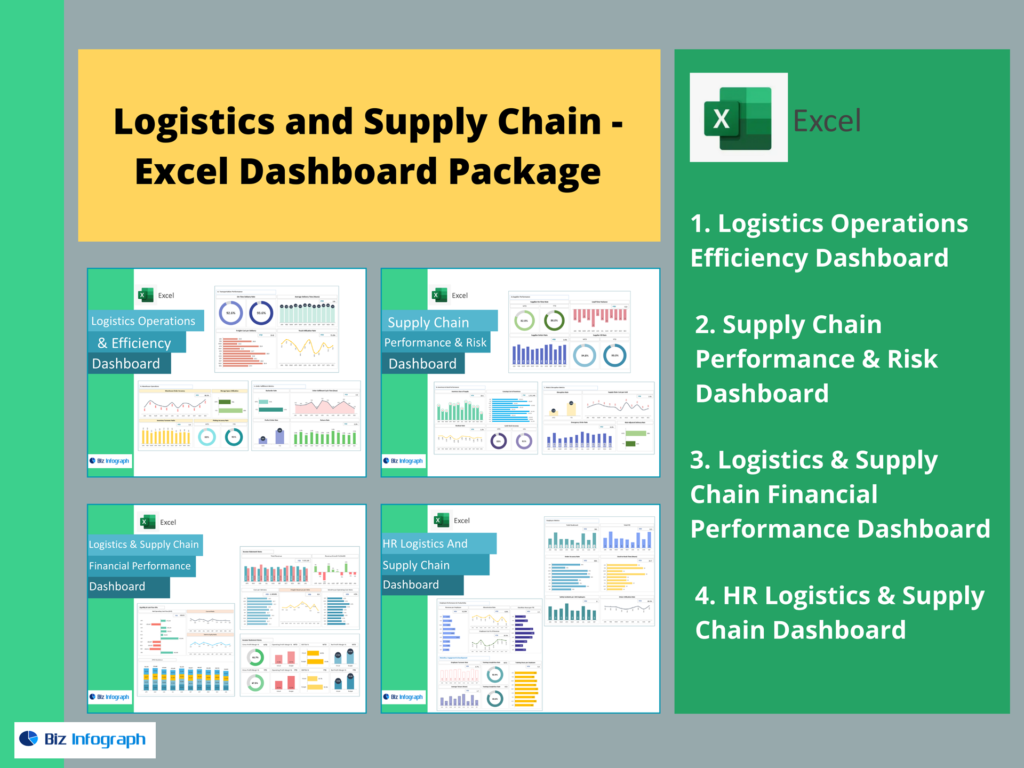
Logistics and Supply Chain Dashboards for Supply Chain Management
A modern dashboard package for logistics and supply chain organizations is no longer a “nice-to-have”—it’s the control tower for supply chain management. Most companies operate across fragmented platforms such as warehouse management tools, ERP modules, spreadsheets, and transport tracking portals. This creates delays and prevents teams from responding quickly to supply chain challenges. A structured dashboard package consolidates the most important supply chain data, allowing teams to monitor performance consistently. In practice, dashboards for supply chain management provide visibility into logistics operations, inventory dashboards, procurement activities, and outbound delivery. This helps supply chain managers improve coordination across functions. The dashboard is designed to support both daily execution and strategic planning through metrics dashboard views, performance dashboard layers, and executive reporting. By using supply chain dashboards, businesses can strengthen alignment across the supply chain and improve overall supply chain efficiency.
Dashboard for Supply Chain Visibility Across Supply Chains
One of the most valuable benefits of any dashboard for supply chain operations is improved supply chain visibility. Visibility means being able to see what is happening right now across warehouses, suppliers, transportation routes, and customer delivery nodes. Since most organizations now operate within a modern supply chain—often tied to global sourcing and complex distribution networks—visibility is essential. Dashboards support supply chain managers by providing a view of the supply chain in one place. You get a consolidated view of inventory dashboards, order fulfillment progress, and logistics performance. When dashboards present data in real time, supply chain leaders can detect disruption early—such as warehouse bottlenecks, order delays, or inventory shortages related to inventory risks. A supply chain dashboard offers a view of your supply chain that spans across the supply chain and ensures consistent decision-making. This makes it easier to manage your supply chain, optimize supply chain execution, and enhance supply chain efficiency.
Dashboard Examples for Logistics and Supply Chain Performance
Organizations often adopt dashboards faster when they see Logistics and supply chain dashboard examples that match their operations. The best examples of supply chain dashboards typically include core KPI areas such as delivery performance, warehouse efficiency, inventory turnover rate, and order cycle time. These dashboard examples show what good dashboard design looks like and help supply chain professionals understand which KPIs matter. For example, a logistics business may use an order management dashboard to monitor order intake, picking, packing, and dispatch stages. Another example may focus on logistics and transportation KPIs such as on-time delivery, average transit time, and freight cost per shipment. These dashboards help logistics teams identify inefficiencies quickly. Dashboards help logistics professionals move away from static weekly reporting toward proactive monitoring. In addition, dashboard examples support onboarding and training by allowing logistics managers and supply chain analysts to compare their current reporting maturity to best-practice models.
KPIs, Metrics, and Supply Chain KPI Dashboards
Key Supply Chain KPIs and Metrics in a Supply Chain Dashboard
A high-performing supply chain depends on consistent tracking of supply chain KPIs and key supply chain metrics. A well-built supply chain KPI dashboard includes KPIs related to delivery reliability, inventory accuracy, throughput, supplier performance, and lead time. A KPI dashboard ensures that executives, supply chain managers, and operations teams are all working from the same performance numbers. Most importantly, the dashboard consolidates supply chain kpi metrics into a single operational view. This prevents conflicting reports and ensures fast decision-making. Key metrics often include inventory turnover rate, order fulfillment rate, delivery performance, and warehouse picking accuracy. In logistics dashboards, key logistics KPIs can include on-time shipment %, carrier reliability, and transit delays. A supply chain metrics dashboard helps supply chain professionals visualize KPIs by region, warehouse, customer segment, or product group. When KPI dashboards are designed properly, they help businesses monitor overall supply chain performance and continuously improve supply chain efficiency.
KPI Dashboard and Supply Chain KPI Dashboard for Performance Tracking
A KPI dashboard is the standard tool to monitor performance across operational and strategic levels. In logistics and supply chain environments, the supply chain KPI dashboard becomes the central system for performance tracking. It supports daily operations by allowing supply chain managers to monitor service levels, warehouse capacity, order delays, and inventory movement. Performance tracking is essential because supply chain challenges—like stockouts, supplier delays, and transport disruption—can quickly degrade customer experience. Dashboards for supply chain management make performance tracking much easier by visualizing trends, highlighting deviations, and enabling drill-down analysis. For instance, a dashboard may show that inventory turnover rate is dropping in certain SKUs related to inventory issues, or that fulfillment speed is declining in one distribution center. Supply chain analysts can then investigate root causes using supply chain analytics tools. In short, KPI dashboards provide supply chain professionals and logistics managers with the structure needed to manage performance proactively.
Effective Supply Chain KPI Dashboard Design for Logistics Performance
An effective supply chain KPI dashboard is designed for clarity, action, and accountability. Dashboards should not be overloaded with numbers; instead, they must highlight the KPIs that influence decision-making and operational control. A strong KPI dashboard is typically layered: high-level KPIs at the top, detailed breakdowns below, and root-cause drilldowns for supply chain analysts. When dashboards support logistics performance, they must include logistics KPIs like delivery performance, transportation cost per unit, warehouse throughput, and picking accuracy. The dashboard supports logistics teams by making bottlenecks visible. For example, if warehouse management capacity is tight, the dashboard should flag congestion and delayed processing. Also, dashboards help logistics professionals manage supply chain effectively by ensuring performance is measured consistently across departments. Since supply chain leaders require consistent metrics to coordinate improvements across the supply chain, dashboard design must align with business goals, supply chain efficiency targets, and operational priorities across logistics operations.
Types of Supply Chain Dashboards and Use Cases
Types of Supply Chain Dashboards for Different Supply Chain Challenges
There are multiple types of supply chain dashboards, and each is built for a specific purpose. Some dashboards focus on daily operational control, while others focus on strategic planning, finance, or workforce performance. For example, inventory dashboards are designed to optimize inventory levels, reduce overstock, and prevent shortage. A performance dashboard is built to track operational KPIs across logistics operations and supplier performance. A planning dashboard focuses on forecast accuracy, demand planning, and capacity readiness. And a risk management dashboard highlights supply chain challenges such as supplier disruptions, late deliveries, quality risks, and logistics bottlenecks. Choosing dashboard types depends on business size, complexity, and supply chain maturity. A complex supply network may require a custom logistics dashboard and advanced supply chain analytics, while a mid-sized logistics business might focus on operational dashboards and KPI dashboards. Ultimately, selecting the right dashboard types allows organizations to improve overall supply chain efficiency and strengthen execution across logistics and supply chain operations.
Dashboards for Supply Chain Management and Supply Chain Efficiency
Dashboards for supply chain management are designed to raise operational discipline and improve supply chain efficiency through continuous performance monitoring. Without dashboards, managers rely on scattered reports and delayed spreadsheets that hide performance issues. But dashboards help businesses solve this by tracking KPIs daily and providing real-time data indicators. A supply chain dashboard helps supply chain managers monitor inventory availability, warehouse capacity, order cycle time, and delivery performance in one place. It also supports supply chain professionals by enabling data-based discussions, not assumptions. For example, if fulfillment delays occur, dashboards can confirm whether the cause is warehouse management constraints or transport delays in logistics and transportation. As businesses scale, dashboards become more important because performance risks multiply across nodes. Dashboard templates provide supply chain professionals with visibility into the overall supply chain and help organizations optimize supply chain processes. This results in improved reliability, lower costs, and better customer service.
Planning and Risk Management Dashboards
Planning Dashboard for Supply Chain Management
A planning dashboard supports proactive supply chain management by helping teams anticipate what will happen next. Unlike operational dashboards that monitor current performance, planning dashboards forecast demand, anticipate inventory needs, and highlight capacity risks. In practice, planning dashboards integrate data from procurement systems, warehouse management records, and transportation plans. They provide supply chain managers with visibility into expected inflows, expected outflows, and constraints across warehouses. Planning dashboards are crucial to optimize inventory because they reduce guesswork and help prevent both stockouts and overstock. A planning dashboard also supports improving supply chain performance by showing demand trends and how they affect logistics operations. It can highlight whether supply chain efficiency will be impacted by supply issues or transport constraints. For supply chain professionals, planning dashboards enable better alignment between procurement, inventory, and fulfillment. This strengthens overall supply chain performance and supports proactive supply chain leaders.
Risk Management Dashboards for Supply Chain Challenges
A risk management dashboard is essential in today’s global and complex supply environment. Supply chain challenges such as supplier failure, transit disruption, inventory shortage, and compliance risk can destroy service levels quickly. A risk dashboard monitors early warning indicators like delayed supplier shipments, quality issues, sudden demand spikes, and rising logistics and transportation delays. Dashboards help logistics managers respond faster by turning risk indicators into actionable alerts. It also supports supply chain managers by highlighting exposure across the overall supply chain. For example, if certain products are related to inventory constraints, the dashboard can show high risk of shortage in specific warehouses. Risk management dashboards help supply chain leaders improve resilience. They enable supply chain professionals to proactively mitigate risk through alternative sourcing, rebalancing inventory dashboards, rerouting delivery plans, or increasing warehouse capacity. Risk dashboards ensure the business doesn’t simply react—it plans ahead.
For ready-to-use Dashboard Templates: