
Overview of the Logistics and Supply Chain Dashboard Package
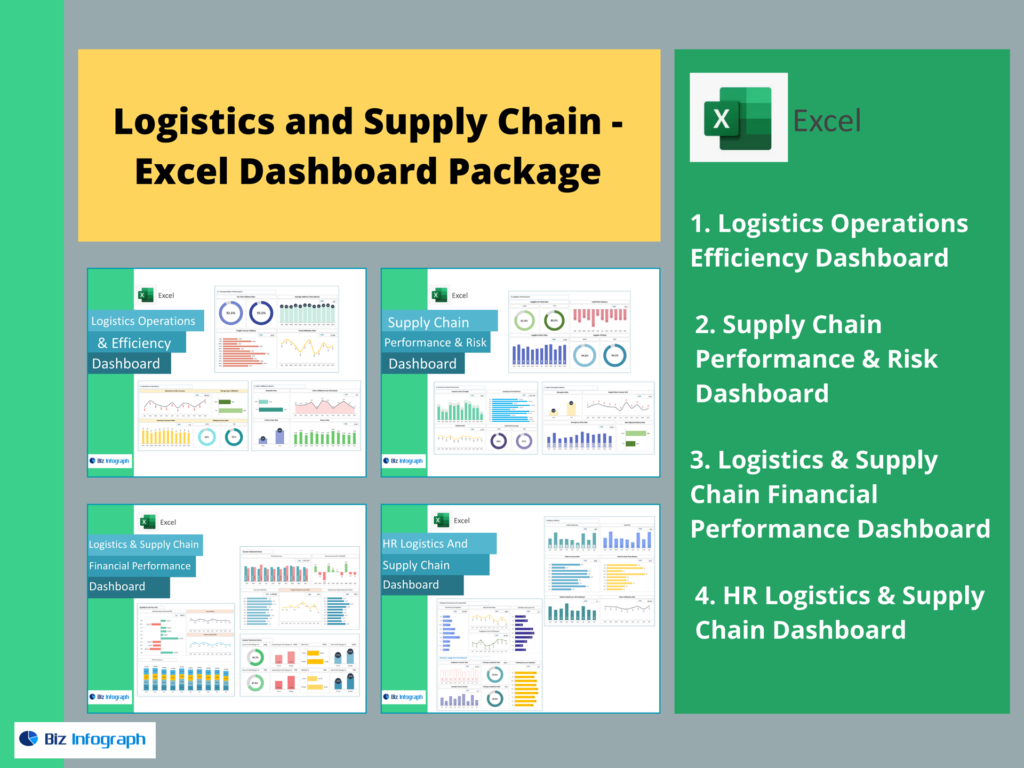
What a Dashboard for Supply Chain and Logistics Management Is
A dashboard for supply chain and logistics management is a centralized digital interface that consolidates operational, performance, and analytical data across logistics and supply chain operations. In today’s logistics and supply chain environment, organizations deal with a complex supply chain involving suppliers, warehouses, transportation, and customers spread across the global supply chain. A dashboard serves as the single source of truth, allowing logistics managers and supply chain professionals to manage their supply networks efficiently.
A modern chain dashboard is a centralized platform that integrates data from warehouse management systems, logistics platforms, and enterprise systems. It delivers a clear view of the supply chain, enabling organizations to track key supply chain metrics, monitor logistics KPIs, and identify bottlenecks. By providing real-time insights into supply chain performance, the dashboard helps organizations optimize supply chain efficiency and manage complexity across the entire supply chain.
Role of Dashboards in the Logistics Industry
In the logistics industry, dashboards play a critical role in supporting daily operations and long-term planning. Logistics companies operate in fast-paced environments where delays, inventory issues, and transportation disruptions can significantly impact performance. A logistics dashboard supports logistics professionals by transforming raw operational data into actionable insights.
Dashboards provide visibility into logistics and transportation activities, enabling logistics teams to monitor shipments, warehouse throughput, and delivery performance. By consolidating data across logistics systems, dashboards support better coordination and faster decision-making. As global supply chains become more complex, dashboards help logistics managers address supply chain challenges and maintain operational resilience.
Dashboard Examples for Logistics and Supply Chain Performance
Dashboard examples demonstrate how logistics and supply chain dashboards can be applied in real-world scenarios. Logistics Supply chain dashboard examples often include visualizations for inventory levels, order fulfillment, transportation costs, and lead times. These examples show how dashboards provide a comprehensive view of the supply chain and enable performance monitoring across locations.
Examples of supply chain dashboards highlight best practices for data visualization and KPI tracking. By reviewing dashboard examples, organizations can understand how dashboards help supply chain professionals track key supply chain metrics and improve performance. These examples also illustrate how dashboards can be tailored to different logistics and supply chain operations.
Supply Chain and Logistics KPIs
Key Metrics and Supply Chain KPIs Tracked in Dashboards
Supply chain dashboards focus on key supply chain metrics that reflect operational efficiency, reliability, and cost control. Common supply chain KPIs include inventory turnover, order accuracy, lead time, transportation cost per unit, and warehouse utilization. For logistics teams, logistics KPIs such as on-time delivery, shipment status, and carrier performance are equally critical.
By tracking KPIs consistently, organizations can identify inefficiencies and opportunities for improvement. A dashboard helps supply chain leaders visualize KPIs in one place, ensuring alignment across teams. These metrics form the foundation of an effective supply chain dashboard and support continuous improvement initiatives.
KPI Dashboard and Supply Chain KPI Dashboard Use Cases
A supply chain KPI dashboard centralizes performance metrics into a single interface that supports operational and strategic decision-making. This type of performance dashboard is used by logistics managers, supply chain leaders, and executives to monitor performance trends and respond to issues proactively.
Use cases include monitoring inventory levels to optimize inventory, tracking logistics KPIs to improve delivery reliability, and analyzing cost drivers across logistics and supply chain operations. A KPI dashboard supports faster responses to supply chain challenges and enables organizations to optimize supply chain efficiency across complex global supply chains.
Performance Dashboard for Logistics and Supply Chain Operations
A performance dashboard provides insights into logistics and supply chain operations by aggregating data across transportation, warehousing, and procurement. It enables organizations to measure performance against targets and benchmarks.
Performance dashboards help supply chain professionals understand how different parts of the supply chain interact and impact outcomes. By visualizing performance data, organizations can identify bottlenecks and implement corrective actions. These dashboards are essential tools for improving supply chain performance and ensuring operational excellence.
Supply Chain Visibility and End-to-End Monitoring
Supply Chain Visibility Across the Entire Supply Chain
Supply chain visibility is one of the most valuable benefits of a logistics and supply chain dashboard. Dashboards provide a view of the entire supply network, from suppliers to customers, enabling end-to-end monitoring.
With real-time insights into supply chain operations, dashboards help organizations detect disruptions early and respond effectively. This visibility supports better coordination and reduces risk across the global supply chain. Dashboards that offer visibility across the entire supply chain empower supply chain managers to manage complexity and maintain continuity.
Management Dashboard for End-to-End Supply Chain Management
A management dashboard supports end-to-end supply chain management by providing executives and managers with a high-level overview of performance. It consolidates data across logistics, procurement, and warehousing to deliver a comprehensive view of the supply chain.
Management dashboards enable leaders to monitor supply chain efficiency and align operations with strategic goals. By offering insights into supply chain operations, these dashboards support informed decision-making and long-term planning.
Addressing Supply Chain Challenges Using Dashboards
Supply chain challenges such as delays, inventory shortages, and cost volatility are common in modern supply chains. Dashboards help organizations address these challenges by providing real-time visibility and analytics.
By tracking key metrics and visualizing trends, dashboards enable proactive problem-solving. They help supply chain managers anticipate disruptions and implement mitigation strategies. Dashboards thus play a critical role in improving supply chain resilience.
Types of Supply Chain and Logistics Dashboards
Types of Supply Chain Dashboards for Different Logistics Needs
There are several types of supply chain dashboards, each designed for specific use cases. Examples include supply chain metrics dashboards, performance dashboards, and management dashboards. Each type serves different stakeholders, from logistics teams to executives.
Understanding the types of dashboards helps organizations select the right solution for their needs. Different dashboards focus on inventory management, operational metrics, strategic KPIs, or analytics, providing flexibility and scalability.
Effective Logistics Dashboard Design and Best Practices
An effective logistics dashboard prioritizes clarity, relevance, and usability. Best practices include selecting the right Key Performance Indicators, using intuitive data visualization, and ensuring real-time data updates.
Effective dashboards support logistics professionals by highlighting critical information and reducing complexity. They enable faster decision-making and improve operational efficiency. Good design ensures dashboards deliver value across the organization.
Choosing the Right Dashboard Software for Logistics
Dashboard software is the backbone of any logistics and supply chain dashboard. The right software integrates with warehouse management systems and other logistics tools to provide seamless data flow.
Modern dashboard tools support scalability, real-time analytics, and customization. Choosing the right dashboard software ensures reliability, performance, and long-term success.
Building and Implementing Dashboard Solutions
How to Build a Logistics Dashboard Using Key Metrics
To build a logistics dashboard, organizations must identify key logistics KPIs and data sources. The dashboard should track metrics that align with operational goals and provide actionable insights.
Building a dashboard involves data integration, visualization design, and validation. By focusing on key metrics, organizations can create dashboards that support logistics teams effectively.
How to Build a Supply Chain Dashboard for Operational Performance
To build a supply chain dashboard, organizations need to integrate data across procurement, warehousing, and transportation. The dashboard should provide insights into supply chain performance and efficiency.
A well-built supply chain dashboard helps supply chain managers monitor performance and optimize operations. It supports continuous improvement and strategic planning.
Creating an Effective Logistics and Supply Chain Dashboard Package
An effective logistics and supply chain dashboard package combines multiple dashboards into a cohesive solution. It includes KPI dashboards, performance dashboards, and management dashboards.
This package provides a comprehensive view of the supply chain and supports decision-making at all levels. By offering real-time insights and analytics, the dashboard package enables organizations to optimize supply chain data operations and achieve sustainable performance.
Conclusion
A Logistics and Supply Chain Dashboard Package is an essential tool for managing modern, complex supply chains. By delivering real-time visibility, analytics, and actionable insights, dashboards empower logistics and supply chain professionals to optimize operations, address challenges, and drive performance across the entire supply chain processes.
For ready-to-use Dashboard Templates: