
Introduction to Payroll Dashboard Excel
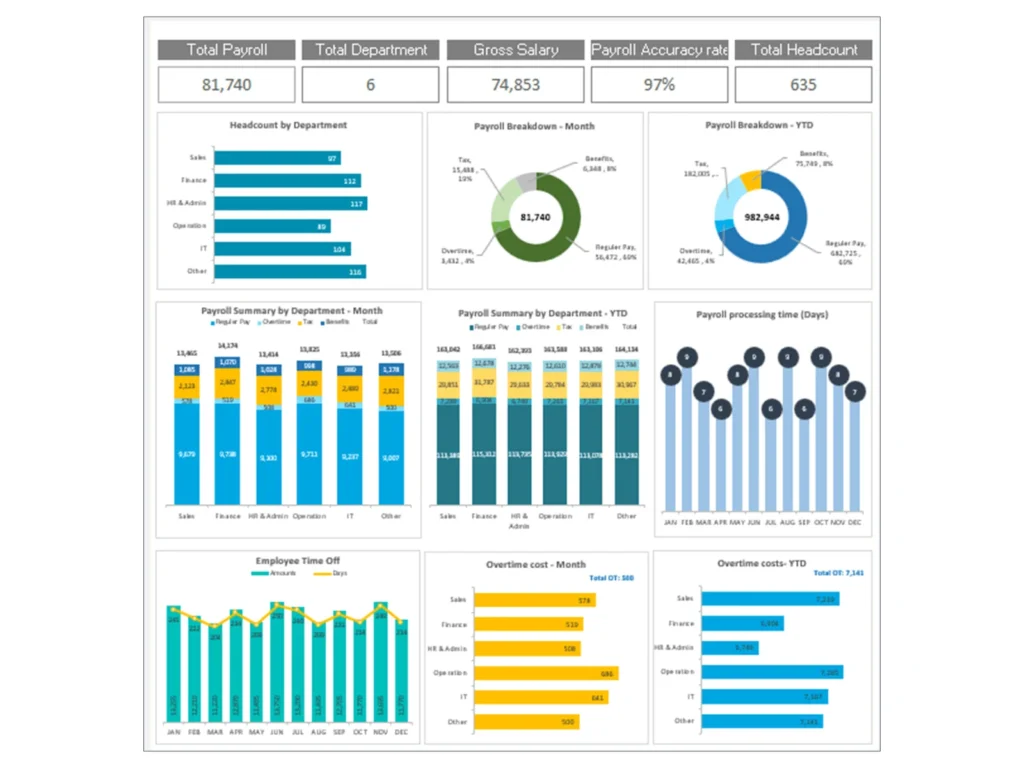
What Is a HR Payroll Dashboard in Modern HR and Finance Reporting
A Payroll Dashboard is an intuitive dashboard that centralizes payroll systems, HR data, and finance reporting into a single, user-friendly dashboard. It is designed to help organizations manage payroll efficiently by tracking salary, overtime, gross pay, deductions, and pay date schedules. The dashboard provides real-time visibility into payroll costs and enables HR teams to monitor workforce expenses with precision.
Modern payroll dashboards integrate with HRIS and management software to reduce complexity and streamline payroll services. They allow organizations to oversee employee information, employee attendance, and compensation trends while ensuring accurate and compliant payroll. The dashboard gives HR leaders the ability to identify areas of concern, monitor payroll performance, and improve productivity.
Additionally, payroll dashboards support transparent reporting by organizing data into clear visuals and layouts. They help ensure compliance with tax filings and tax calculations while providing real-time insights that enhance decision-making. Ultimately, a Payroll Dashboard allows organizations to manage payroll effortlessly and maintain full oversight of financial and HR operations.
Why Organizations Use Payroll Dashboard Excel and Payroll Dashboard Templates
Organizations rely on Payroll Dashboard Excel and Payroll Dashboard templates because they offer a customizable and cost-effective way to manage payroll data without heavy reliance on external payroll services or providers. These templates are designed to simplify payroll management by organizing payroll metrics into a structured and intuitive dashboard layout.
A customizable Payroll Dashboard template allows HR teams to configure payroll data such as gross salary, deductions, overtime, and pay date schedules. This flexibility helps organizations streamline payroll processes and reduce errors in tax calculations and reporting. Templates also support faster payroll processing by automating repetitive tasks and enabling seamless data handling.
These templates provide real-time visibility into payroll costs and compensation trends, helping HR teams monitor expenses and improve decision-making. They also enhance transparency by providing a clear overview of payroll data, ensuring compliance with tax filings and regulatory requirements.
For organizations dealing with complex payroll systems, templates reduce complexity and provide a robust solution for managing payroll efficiently. They empower HR teams to build custom dashboards tailored to their needs, improving productivity and overall payroll management.
Role of HR Dashboard in Payroll Reporting and Analytics
The HR Dashboard plays a critical role in payroll reporting and analytics by transforming raw payroll data into actionable insights. A Payroll Dashboard allows HR teams to track key HR metrics, monitor payroll costs, and analyze compensation trends in real time.
The dashboard provides real-time insights into payroll operations, enabling HR professionals to oversee payroll activities and ensure compliance with tax filings and regulations. It helps organizations identify areas where payroll processes can be improved, such as reducing overtime costs or optimizing salary structures.
By integrating payroll data with HR metrics, the dashboard enhances reporting capabilities and supports data-driven decision-making. It allows HR teams to monitor employee attendance, track employee information, and evaluate productivity.
Ultimately, the HR Dashboard enables organizations to manage payroll more effectively, improve reporting accuracy, and ensure accurate and compliant payroll processes.
Key Payroll Metrics and Analytics in Payroll Dashboard
Understanding Payroll Metrics and Workforce Payroll Data
Understanding payroll metrics is essential for effective payroll management. The Payroll Dashboard tracks key metrics such as gross salary, deductions, overtime, payroll costs, and pay date schedules. These metrics provide insights into workforce payroll data and help HR teams monitor expenses and compensation trends.
The dashboard allows organizations to analyze HR data and track payroll metrics efficiently. It integrates employee attendance and employee information, enabling HR teams to evaluate the relationship between attendance and payroll costs. This holistic view helps organizations identify areas where payroll processes can be optimized.
By monitoring payroll metrics, organizations can ensure compliance with tax filings and tax calculations while improving payroll accuracy. The dashboard also supports transparent reporting, allowing HR teams to oversee payroll operations effectively.
Understanding these metrics is crucial for improving decision-making and ensuring efficient payroll management.
Tracking Payroll Trends and Cost Analysis Using Analytics
Tracking payroll trends is a key function of the Payroll Dashboard. It enables organizations to analyze compensation trends, monitor payroll costs, and evaluate workforce expenses over time.
The dashboard provides real-time visibility into payroll data, allowing HR teams to identify trends such as increased overtime or changes in salary structures. By analyzing these trends, organizations can take proactive steps to manage payroll costs and improve efficiency.
Advanced analytics tools help HR teams identify areas where payroll processes can be optimized. For example, analyzing payroll data can reveal opportunities to reduce unnecessary expenses or improve productivity.
By leveraging analytics, organizations can enhance payroll management, improve cost efficiency, and support strategic decision-making.
Monitoring Payroll Performance with HR Dashboard Reporting
Monitoring payroll performance is essential for ensuring efficient payroll operations. The HR Dashboard allows organizations to track payroll metrics and evaluate performance using real-time reporting.
The dashboard provides insights into payroll processes, enabling HR teams to monitor key performance indicators such as payroll accuracy, processing time, and compliance. It also supports transparent reporting by presenting data in a clear and user-friendly dashboard format.
By analyzing dashboard data, organizations can identify areas for improvement and implement enhancements to payroll processes. This includes optimizing workflows, reducing errors, and improving reporting accuracy.
The dashboard also supports oversight and ensures that payroll operations align with organizational goals, enabling HR teams to manage payroll effectively.
Payroll Dashboard for HR and Finance Insights
Using Payroll Dashboard for HR Reporting and Workforce Management
The Payroll Dashboard is a powerful tool for HR reporting and workforce management. It allows HR teams to monitor payroll metrics, track employee attendance, and evaluate workforce productivity.
The dashboard provides real-time insights that help HR professionals manage payroll efficiently and ensure accurate reporting. It also supports workforce planning by analyzing compensation trends and identifying areas for improvement.
By integrating payroll data with HR metrics, the dashboard enhances reporting capabilities and supports data-driven decision-making. It enables HR teams to oversee workforce data and improve overall HR management.
Supporting Finance Overview with Payroll Analytics and Reporting
Payroll dashboards provide a comprehensive finance overview by analyzing payroll costs, tax calculations, and compensation trends. They help finance teams monitor expenses and ensure compliance with financial regulations.
The dashboard allows organizations to oversee payroll operations and make informed financial decisions. It also supports accurate reporting and improves transparency in payroll management.
Custom Payroll Dashboard for Business-Specific Insights
A custom payroll dashboard allows organizations to build custom solutions tailored to their specific needs. It enables HR teams to configure payroll data and create dashboards that provide relevant insights.
Payroll Dashboard Examples and Use Cases
Payroll Dashboard Example for Workforce Payroll Analysis
A Payroll Dashboard example demonstrates how organizations analyze payroll data, track payroll costs, and monitor workforce expenses using a structured dashboard layout.
HR Dashboard Example for Payroll Reporting and Analytics
HR dashboard examples highlight how payroll metrics, HR data, and analytics are used to improve reporting and decision-making.
Custom Dashboard Example for Payroll Trends and Insights
Custom dashboard examples show how organizations track compensation trends and optimize payroll processes.
Building Payroll Dashboard Template in Excel
Designing Payroll Dashboard Excel Template
Designing a Payroll Dashboard Excel template involves creating a structured and intuitive dashboard layout that organizes payroll data into visual formats. HR teams can build custom templates that include key metrics such as gross salary, deductions, overtime, and pay date schedules.
The template should be user-friendly and allow HR professionals to navigate data effortlessly. Incorporating automation features helps streamline payroll processes and improve accuracy.
Structuring Payroll Data and Metrics for Reporting
Structuring payroll data is essential for accurate reporting and analysis. HR teams must organize employee information, payroll costs, and tax calculations into clear categories.
This ensures that the dashboard provides accurate insights and supports compliance with tax filings. Proper data structuring also enhances transparency and improves decision-making.
Creating Custom Payroll Dashboard Templates for Analytics
Creating custom payroll dashboard templates allows organizations to tailor dashboards to their specific needs. These templates can include advanced analytics features, enabling HR teams to analyze payroll data in real time.
Benefits of Payroll Dashboard for Organizations
Improving Payroll Reporting and Data Accuracy
Payroll dashboards improve reporting accuracy by providing real-time insights and reducing manual errors.
Supporting Data-Driven HR and Finance Decisions
They support data-driven decision-making by providing actionable insights into payroll data.
Enhancing Payroll Analytics and Workforce Visibility
Payroll dashboards enhance analytics and improve workforce visibility.
Pricing and Implementation Considerations
Understanding Payroll Dashboard Pricing and Cost Factors
Understanding pricing helps organizations choose the right payroll solutions and manage costs effectively.
Choosing the Right Payroll Dashboard Template and Tools
Selecting the right tools ensures efficient payroll management and reporting.
Implementing Payroll Dashboard with Best Practices
Implementing best practices ensures successful deployment and long-term value.
Frequently Asked Questions About Payroll Dashboard
What Are the Key Features of a Payroll Dashboard
Key features include analytics, reporting, and real-time insights.
How Payroll Dashboard Improves HR and Finance Reporting
It improves reporting accuracy and supports better decision-making.
What Are the Best Practices for Payroll Dashboard Implementation
Best practices ensure effective use and optimization of payroll dashboards.
For ready-to-use Dashboard Templates: