
Introduction to Employee Engagement Dashboard
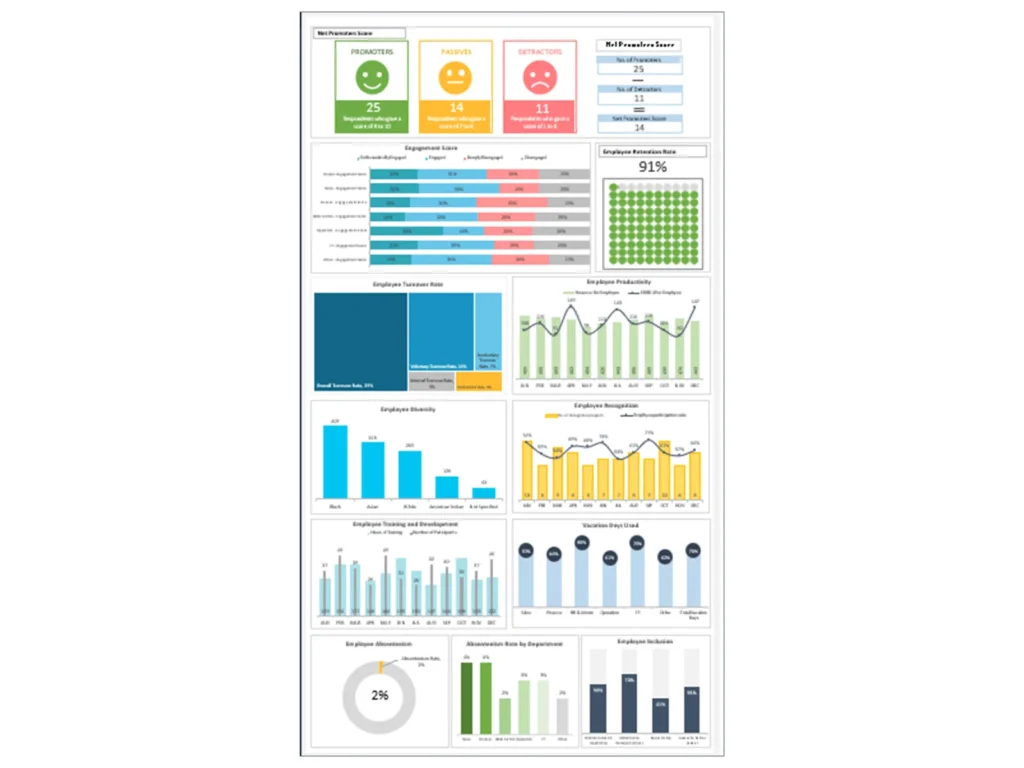
What Is an Employee Engagement Dashboard in Modern HR Management
An Employee Engagement Dashboard is a powerful HR dashboard designed to track, analyze, and improve employee engagement across the organization. It consolidates engagement metrics, survey results, and HR metrics into a single visual interface that helps HR teams and leaders monitor engagement levels and employee experience in real time.
The dashboard to track employee engagement typically includes key metrics such as engagement scores, employee satisfaction rate, participation rate, and employee turnover rate. These metrics help organizations understand how engaged employees are and identify patterns that may indicate disengage risks. A well-designed dashboard helps HR teams visualize engagement trends early and take proactive action.
Employee engagement dashboard helps organizations align engagement initiatives with business goals by providing real-time insights into workforce sentiment. It also integrates with employee engagement software and engagement tools, allowing HR professionals to track engagement activities, monitor employee performance, and evaluate the impact employee engagement has on productivity and retention.
Ultimately, the dashboard provides a data-driven foundation for improving engagement strategies, enhancing company culture, and keeping employees motivated and committed.
Why Organizations Use Workforce Diversity Dashboard Excel and Dashboard Templates for Engagement Tracking
Organizations use Workforce Diversity Dashboard Excel and dashboard templates to track engagement metrics efficiently and cost-effectively. These templates provide a customizable and user-friendly solution for HR teams to measure employee engagement without relying solely on complex systems.
A metrics dashboard built in Excel allows HR teams to track metrics such as engagement scores, net promoter score, employee satisfaction index, and employee retention rate. These templates support engagement reporting by organizing survey results and HR metrics into clear visual formats.
Custom dashboards enable HR teams to tailor engagement tracking to their specific needs, including tracking employee sentiment, engagement patterns, and feedback loop outcomes. They also allow integration with recruitment dashboard data to understand how the hiring process impacts engagement.
These templates are particularly valuable for organizations that need flexibility and scalability. They help HR teams face challenges in managing large volumes of employee data while maintaining accuracy. By using dashboard templates, organizations can make data-driven decisions, improve employee engagement strategy, and enhance overall workforce performance.
Role of HR Dashboard in Measuring Employee Engagement and Satisfaction
The HR dashboard plays a critical role in measuring employee engagement and satisfaction by providing a centralized platform to track key HR metrics. It allows HR teams to monitor employee satisfaction survey results, engagement scores, and employee sentiment in real time.
The dashboard helps HR teams identify low engagement areas and understand the root causes of disengagement. For example, if survey results show low satisfaction in certain departments, HR leaders can implement targeted engagement initiatives to address these issues.
It also enables managers and HR professionals to track the percentage of employees who are engaged and employees are to recommend the organization, often measured through net promoter score. This insight is crucial for improving employee experience and strengthening company culture.
By providing real-time data and actionable insights, the HR dashboard supports continuous improvement in engagement strategies and ensures alignment with organizational goals.
Key Employee Engagement Metrics and KPIs
Understanding Engagement Metrics and Engagement Scores
Engagement metrics and engagement scores are essential for measuring how connected employees feel to their work and organization. The Employee Engagement Dashboard tracks key metrics such as engagement levels, employee satisfaction index, and net promoter score to evaluate workforce engagement.
Engagement scores are derived from employee engagement surveys and reflect employee sentiment and overall satisfaction. These scores help HR teams identify trends and patterns that impact employee engagement and retention.
Metrics like employee turnover rate, retention rate, and percentage of employees engaged provide valuable insights into workforce stability. By analyzing these metrics, HR leaders can identify areas where engagement strategies need improvement and develop targeted initiatives to enhance engagement.
Tracking engagement metrics also helps organizations align HR initiatives with business goals and improve overall performance.
Tracking Participation Rate and Employee Engagement Survey Results
Participation rate is a critical metric that indicates how many employees are actively engaging in surveys and feedback processes. A high participation rate ensures that survey results accurately reflect employee sentiment and engagement levels.
The survey dashboard tracks participation rate alongside engagement survey results, providing insights into employee feedback and engagement patterns. HR teams can analyze these results to identify trends early and address issues before they escalate.
Employee engagement survey data includes metrics such as employee satisfaction rate, feedback loop effectiveness, and employee sentiment. These insights help HR teams understand the effectiveness of engagement initiatives and improve employee experience.
By tracking participation rate and survey results, organizations can ensure that engagement strategies are data-driven and aligned with employee needs.
Measuring Employee Satisfaction and Performance Metrics
Measuring employee satisfaction and performance metrics is essential for understanding the impact employee engagement has on productivity and retention. The Employee Engagement Dashboard includes metrics such as employee performance, employee satisfaction survey results, and engagement scores.
These metrics help HR teams evaluate how engagement levels influence employee performance and overall organizational success. For example, higher engagement levels often correlate with improved performance metrics and lower turnover rates.
The dashboard also tracks employee cost and the relationship between engagement and productivity. This helps organizations optimize resource allocation and improve workforce efficiency.
By analyzing satisfaction and performance metrics, HR teams can develop strategies to improve employee engagement and create a more positive workplace culture.
Employee Engagement Surveys and Analytics
Using Engagement Surveys and Survey Dashboard for Insights
Engagement surveys are a primary tool for collecting employee feedback and measuring engagement levels. The survey dashboard aggregates survey results and presents them in a visual format, making it easier for HR teams to analyze employee sentiment.
The dashboard helps HR teams track metrics such as engagement scores, participation rate, and employee satisfaction index. These insights enable organizations to identify areas where engagement initiatives are needed and improve employee experience.
Engagement surveys also support a continuous feedback loop, allowing HR teams to monitor changes in employee sentiment over time. This helps organizations stay on top of engagement trends and implement timely interventions.
By using survey dashboards, organizations can improve engagement reporting and ensure that employee feedback is effectively utilized.
Analyzing Employee Engagement Survey Data with BI Tools
Business intelligence (BI) tools enhance the capabilities of the Employee Engagement Dashboard by providing advanced analytics and visualization features. BI tools allow HR teams to analyze engagement data more effectively and generate real-time insights.
The dashboard provides real-time data on engagement metrics, enabling HR leaders to make data-driven decisions. BI tools also help identify engagement patterns and trends early, allowing organizations to take proactive measures.
By integrating BI with employee engagement software, organizations can create custom dashboards that provide deeper insights into workforce engagement. This helps HR teams optimize engagement strategies and improve overall performance.
Improving Engagement Reporting with Data-Driven Insights
Engagement reporting is essential for evaluating the effectiveness of engagement initiatives and improving workforce performance. The Employee Engagement Dashboard provides insights that help HR teams track metrics and analyze engagement trends.
The dashboard allows HR teams to measure employee engagement and retention, identify low engagement areas, and develop strategies to address them. It also supports engagement reporting by presenting data in a clear and actionable format.
Data-driven insights enable organizations to make better decisions and improve employee engagement strategies. By leveraging these insights, HR teams can enhance employee experience, reduce turnover rate, and strengthen company culture.
Employee Engagement Dashboard Examples and Use Cases
Employee Engagement Dashboard Example for HR Teams
An Employee Engagement Dashboard example demonstrates how HR teams track engagement metrics, analyze survey results, and monitor workforce performance.
Metrics Dashboard Example for Engagement Activities and Performance
A metrics dashboard example highlights how organizations track engagement activities and performance metrics.
Survey Dashboard Example for Employee Satisfaction Tracking
A survey dashboard example shows how organizations measure employee satisfaction and engagement levels.
Building Employee Engagement Dashboard Template in Excel
Designing Workforce Diversity Dashboard Excel Template for Engagement Metrics
Designing a dashboard template involves structuring engagement data into visual formats.
Structuring Engagement Metrics Dashboard and KPIs
Structuring metrics ensures accurate tracking of engagement levels.
Creating Custom Dashboards to Track Employee Engagement
Custom dashboards help HR teams track engagement effectively.
Benefits of Employee Engagement Dashboard for Organizations
Improving Company Culture and Employee Satisfaction
The dashboard improves company culture and employee satisfaction.
Supporting Engagement Strategies and HR Decision-Making
It supports engagement strategies and decision-making.
Enhancing Employee Engagement and Workforce Performance
The dashboard enhances engagement and workforce performance.
Best Practices for Implementing Employee Engagement Dashboard
Selecting the Right Engagement Metrics and KPIs
Choosing the right metrics ensures meaningful insights.
Using Dashboard Templates and Engagement Tools Effectively
Using templates improves efficiency and reporting.
Building Effective HR Dashboards to Improve Employee Engagement
Effective dashboards ensure long-term engagement success.
For ready-to-use Dashboard Templates: