
Introduction to HR KPI Dashboard
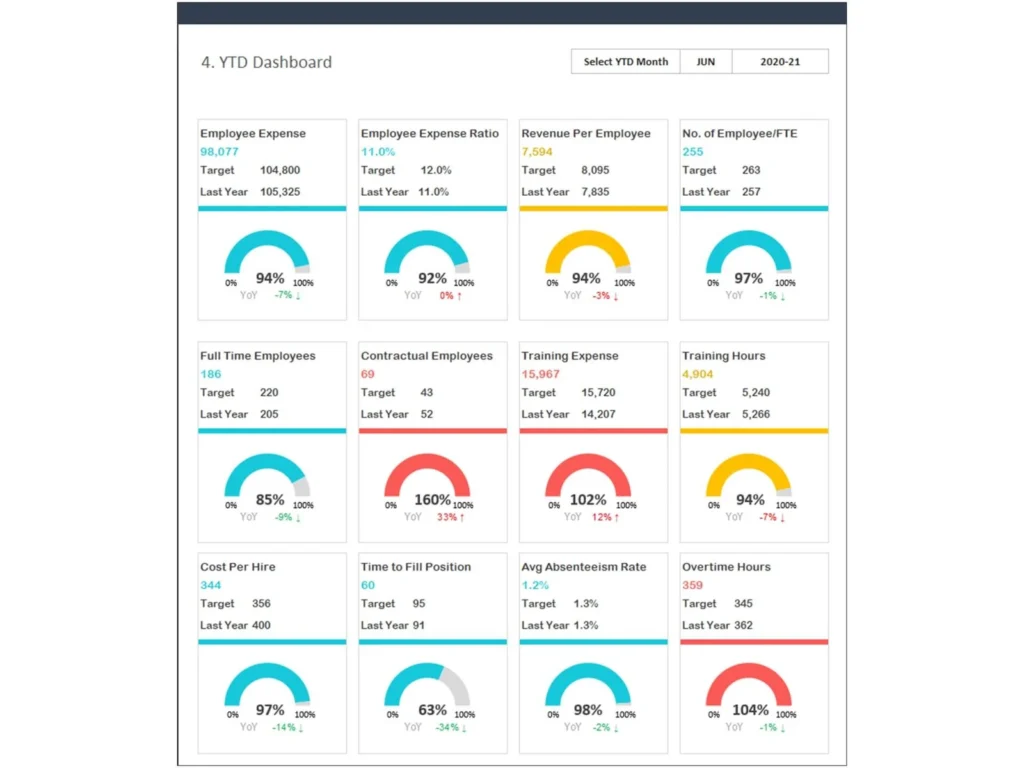
What Is an HR KPI Dashboard in Modern Human Resource Management
An HR KPI Dashboard is a visual tool used by the HR department to monitor workforce performance through metrics and key performance indicators. In modern HR environments, organizations rely on HR metrics dashboards and HR analytics dashboards to evaluate workforce productivity, recruitment outcomes, employee engagement, and overall HR performance. The HR KPI Dashboard is a tool that helps HR professionals transform large volumes of HR data into meaningful insights that guide strategic decisions.
The HR KPI Dashboard is a visual representation of key HR metrics and performance indicators. HR dashboards provide a centralized view of workforce metrics, enabling HR leaders and HR staff to analyze workforce trends and evaluate HR initiatives. For example, a human resources KPI dashboard may include metrics to track employee engagement, turnover rate, recruitment efficiency, and employee satisfaction.
Modern HR organizations use interactive dashboards built on analytics platforms to explore HR data analytics more effectively. These dashboards help HR teams align HR processes with business objectives and support strategic HR planning. By using HR dashboards and HR reports, organizations can improve HR operations and ensure HR functions contribute to organizational success.
Why Organizations Use HR KPI Dashboard Excel and Dashboard Templates
Organizations widely use HR KPI Dashboard Excel solutions because they offer a flexible and customizable way to monitor HR performance. An HR KPI Dashboard template allows HR professionals to organize HR metrics, track workforce trends, and evaluate HR initiatives through structured reports and visual dashboards.
A dashboard template helps HR teams track metrics related to workforce performance, recruitment efficiency, and employee engagement. By organizing metrics and KPIs within a structured format, HR professionals can ensure that HR reporting remains consistent and accurate. The HR KPI Dashboard template also helps HR teams track essential HR indicators and evaluate the effectiveness of HR processes.
Excel dashboards remain popular because they are easy to customize and integrate with HR systems. HR teams can use these templates to create different HR dashboards such as diversity dashboards, recruitment dashboards, and employee engagement dashboards. These dashboards help HR professionals explore HR trends and generate insights that support effective HR decision-making.
Role of HR Dashboard in Tracking Workforce Metrics and HR Reports
The HR dashboard plays a vital role in tracking workforce metrics and generating HR reports. An HR KPI Dashboard allows HR teams to monitor HR performance indicators, evaluate workforce productivity, and analyze workforce trends in real time.
The dashboard allows HR professionals to track key HR metrics such as turnover rate, employee satisfaction, and workforce productivity. These metrics help HR leaders understand how HR initiatives impact workforce performance and organizational outcomes.
Regular reporting enables HR leaders to identify trends and measure HR performance over time. HR dashboards and HR reports provide HR professionals with insights that support strategic workforce planning and HR decision-making. By using the right HR dashboard, organizations can improve HR reporting accuracy and strengthen HR management practices.
Key HR Metrics and KPIs in HR KPI Dashboard
Understanding Human Resources Key Performance Indicators and HR Metrics
Human resources key performance indicators are measurable metrics used to evaluate HR performance and workforce effectiveness. The HR KPI Dashboard provides HR professionals with a platform to track these key HR metrics and evaluate the impact of HR functions on organizational performance.
Examples of HR KPIs include recruitment efficiency, employee retention, employee satisfaction, training effectiveness, and workforce productivity. These metrics and KPIs help HR teams understand how HR initiatives influence employee engagement and organizational growth.
The HR metrics dashboards enable HR teams to track metrics and analyze workforce trends. HR professionals can explore HR data analytics to identify patterns that affect HR performance. By monitoring HR metrics consistently, organizations can align HR strategies with business objectives and improve workforce outcomes.
Tracking Employee Engagement, Employee Satisfaction, and Workforce Performance
Employee engagement and employee satisfaction are essential HR metrics that reflect workforce motivation and organizational culture. The HR KPI Dashboard allows HR teams to track engagement metrics and analyze workforce satisfaction levels across departments.
Tracking employee engagement helps HR professionals evaluate the effectiveness of HR initiatives such as training programs, employee development activities, and workplace culture initiatives. These metrics also help HR teams identify potential issues affecting workforce morale.
Employee satisfaction metrics are closely linked to workforce performance. HR dashboards provide insights that help HR leaders evaluate employee engagement levels and determine whether HR strategies support employee well-being. By tracking these metrics, HR professionals can improve workforce productivity and strengthen organizational performance.
Monitoring Turnover Rate and Workforce Trends Using HR KPI Dashboard
Employee turnover rate is one of the most important HR metrics tracked in the HR KPI Dashboard. Turnover metrics help HR professionals evaluate workforce stability and identify trends related to employee departures.
The HR KPI Dashboard tracks turnover rate and other workforce trends through interactive dashboards. HR professionals can analyze turnover patterns across departments, job roles, and time periods.
By monitoring turnover trends, HR teams can identify factors contributing to employee attrition and implement strategies that improve retention. These insights enable HR leaders to strengthen HR processes and ensure workforce stability.
HR Analytics and People Analytics in HR KPI Dashboard
How HR Analytics Transforms HR Processes and Workforce Management
HR analytics plays a crucial role in transforming HR processes and workforce management. HR analytics dashboards allow HR professionals to analyze workforce data and generate insights that support strategic HR decision-making.
By integrating HR data analytics with HR systems, organizations can evaluate workforce performance more effectively. HR professionals can analyze HR metrics related to recruitment, employee engagement, and workforce productivity.
HR analytics platforms enable HR teams to track HR initiatives and evaluate their impact on workforce outcomes. This data-driven approach allows HR leaders to improve HR processes and optimize workforce management strategies.
Using People Analytics to Improve HR Decisions and Performance
People analytics is a powerful approach that uses data analysis to understand workforce behavior and improve HR decision-making. The HR KPI Dashboard enables HR professionals to analyze workforce metrics and identify opportunities to improve employee performance.
People analytics helps HR teams understand workforce trends such as employee engagement levels, productivity patterns, and training effectiveness. By analyzing these insights, HR leaders can design HR initiatives that enhance workforce performance.
Using people analytics within HR dashboards enables organizations to align HR strategies with business objectives. This approach helps HR teams improve workforce performance and achieve strategic HR goals.
Role of Interactive Dashboard in HR Metrics Dashboards
Interactive dashboards enhance the effectiveness of HR metrics dashboards by allowing HR professionals to explore workforce data dynamically. An interactive HR dashboard allows users to filter data, analyze trends, and compare workforce metrics across departments.
These dashboards help HR teams track metrics more efficiently and identify patterns in HR performance. Interactive dashboards also make it easier for HR professionals to communicate insights to HR leaders and top management.
By providing visual insights into HR data, interactive dashboards help organizations improve HR reporting and strengthen HR decision-making processes.
HR KPI Dashboard Examples and Use Cases
HR KPI Dashboard Example for HR Department Performance Monitoring
An HR KPI Dashboard example for HR department performance monitoring typically includes metrics related to recruitment efficiency, employee engagement, and workforce productivity. These dashboards provide HR leaders with insights into HR performance and workforce trends.
HR managers can use these dashboards to evaluate HR initiatives and measure HR department effectiveness. By monitoring key HR metrics through dashboards, organizations can improve HR operations and workforce management.
Human Resources KPI Dashboard Example for Workforce Analysis
A human resources KPI dashboard example focuses on workforce analysis and performance evaluation. These dashboards analyze HR metrics related to employee engagement, turnover rate, and workforce productivity.
By analyzing these metrics, HR professionals can identify workforce trends and develop strategies that improve HR performance. Workforce analysis dashboards provide HR leaders with insights that support strategic HR planning.
KPI Dashboard Example for Employee Engagement and HR Metrics
A KPI dashboard example focused on employee engagement highlights metrics related to workforce satisfaction, productivity, and training participation. These dashboards help HR teams evaluate the effectiveness of HR initiatives designed to improve employee engagement.
Tracking engagement metrics allows HR leaders to understand workforce dynamics and improve organizational culture. These dashboards provide HR professionals with insights that support employee development and workforce productivity.
Building an HR KPI Dashboard Template in Excel
Designing an HR KPI Dashboard Excel Template for HR Reporting
Designing an HR KPI Dashboard Excel template involves organizing HR metrics and KPIs into structured tables and visual charts. Excel dashboards allow HR teams to track metrics and generate HR reports efficiently.
Structuring HR KPIs and HR Metrics in the Dashboard
Structuring HR key metrics properly ensures HR dashboards provide accurate insights into workforce performance.
Creating Interactive HR Dashboard Templates for KPI Monitoring
Interactive dashboard templates allow HR professionals to analyze workforce metrics dynamically.
Functions and Capabilities of HR KPI Dashboard
Key Functions of HR Dashboards for HR Leaders and Teams
HR dashboards provide HR leaders with insights into workforce performance and HR initiatives.
Using HR KPI Dashboard Tools for HR Reports and Workforce Insights
Dashboard tools help HR teams generate HR reports and analyze workforce metrics effectively.
Integrating HR Processes and Workforce Data in KPI Dashboards
Integrating workforce data into dashboards helps HR professionals evaluate HR performance more effectively.
For ready-to-use Dashboard Templates: