
Understanding the Hotel Operations and Guest Experience Dashboard
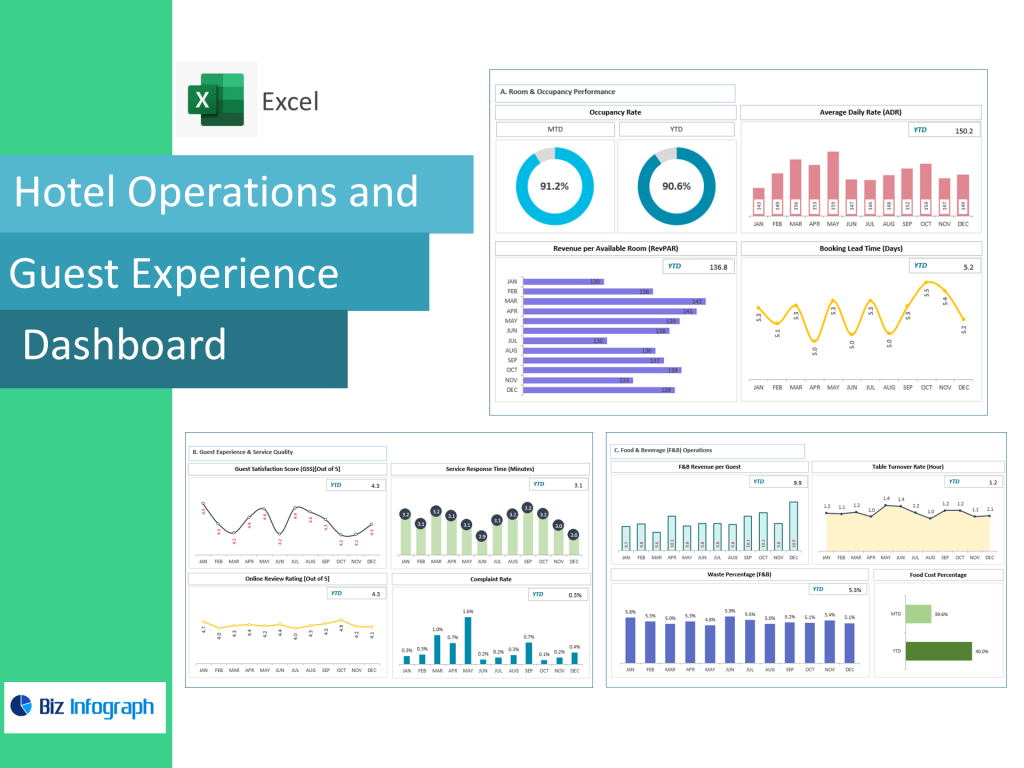
How a Hotel Dashboard Helps Hotel Management Improve Daily Operations
A Hotel Operations and Guest Experience Dashboard is a centralized management tool that brings together hotel data, operational workflows, staff performance, guest behavior, and real-time visibility into hotel activities. Hotel management teams rely on such dashboards to monitor daily operations, including room occupancy, front-desk activity, service response time, dining operations, and housekeeping performance. Through structured data analytics, hotels gain actionable insights into bottlenecks and opportunities to optimize operations and profitability. Real-time dashboards allow hotel managers to track changing trends instantly—whether it’s a sudden spike in bookings, an increase in complaint rate, or low occupancy in specific room types.
By consolidating data from property management systems (PMS), hotel software, booking platforms, and financial management software, the dashboard provides a comprehensive view of hotel performance. The dashboard helps hotel management allocate labor more accurately, adjust inventory management for housekeeping and F&B, and maintain consistency in guest services. With hotel data available in real-time, operations managers can make informed decisions that reduce costs, improve guest flow, and maximize resource use. Ultimately, the dashboard is built for hotels seeking to strengthen both operations and guest experience through organized, relevant data.
Key KPIs and Hotel Data Used to Monitor Guest Experience
Guest satisfaction is a critical driver of repeat business and online review rating improvement. Therefore, key performance indicators must cover the full scope of the guest experience. The dashboard tracks KPIs such as overall guest satisfaction score, complaint rate, service response time, online review sentiment, room cleanliness status, and table turnover rate for F&B operations. These KPIs reflect the daily guest journey and highlight where hotel staff must focus to enhance guest satisfaction. Additional hotel data such as guest demographics, booking lead time, booking sources, and guest preferences help hotel managers understand guest trends and personalize services.
Operational KPIs like room occupancy, labor data usage, and inventory levels for housekeeping supplies ensure the dashboard supports both guest experience and operational control. Revenue-related KPIs—such as revenue per guest, F&B per guest, and revenue per available room—connect operational results to profitability outcomes. A hotel management dashboard also helps track performance metrics across departments, such as front office, concierge, F&B, and housekeeping, to reveal disparities in service quality. When hotels use these KPIs effectively, they not only solve immediate operational concerns but also elevate the complete guest experience.
Real-Time Insights and Data Visualization for Hoteliers
Real-time insights are essential for operations managers and hotel executives who must act quickly to maintain service quality. Real-time hotel dashboards show movements across the hotel ecosystem—guest arrivals, housekeeping progress, maintenance issues, inventory demand, and channel performance updates from booking platforms. With dynamic data visualization, complex hotel data becomes easy to interpret. Hotel managers can identify unexpected dips in occupancy, service delays, or low-performing revenue channels at a glance rather than digging into clean data sheets manually.
Real-time data makes proactive decision-making possible. For example, if online review analysis shows rising complaint rates regarding room cleanliness, housekeeping staffing adjustments can be made immediately. A dashboard tailored for hotel management also shows peaks in demand, enabling better labor scheduling or adjusting rates as part of revenue management efforts. These visual insights increase operational agility and help hotels respond quickly to market behavior. Whether adjusting pricing, reallocating staff, or identifying patterns in guest behavior, real-time insights drive the continuous improvement necessary for competitive hospitality environments.
Core Features and Structure of a Custom Hotel Dashboard
Essential Dashboard Components for Hotel Operations and Guest Experience
A custom hotel dashboard includes modules designed to track key performance indicators relevant to both daily operations and guest experience. Essential components include occupancy panels, revenue dashboards, housekeeping progress displays, service ticket response boards, and staff productivity metrics. Additional panels track F&B per guest, revenue per guest, inventory management indicators, booking channel performance, and online review sentiment. Performance dashboards provide data visualization layouts that give a comprehensive view of overall performance without overwhelming the user.
Operations and guest experience dashboard appear side-by-side to help managers understand how operational conditions influence guest outcomes. For example, slow room turnover affects early check-in satisfaction scores. The dashboard might include complaint rate tracking, executive dashboard summaries for leadership, and departmental dashboards for targeted insights. Having a dashboard tailored to hotel management ensures all data is relevant, organized, and actionable. With this structure, operations managers can better manage operations, adjust resources, and enhance guest experience continuously.
Template Designs and Custom Hotel Dashboard Options
Hotels may choose between ready-made dashboard templates or fully custom hotel dashboards built around their workflow. Templates provide a standardized structure, turning PMS and hotel software data into pre-formatted, clean dashboards without complex setup. A template turns PMS data into accessible metrics such as occupancy breakdown, revenue per available room, housekeeping schedule tracking, and guest satisfaction metrics. Templates also reduce implementation time and cost, allowing smaller hotels to adopt data-driven management quickly.
Custom dashboards allow deeper integration with hotel management tools, including cloud-based hotel management systems, inventory control platforms, and financial management software. They offer more flexibility regarding branding, unique KPIs, multi-property reporting, and executive-level analytics. Custom dashboards also merge operational and financial views, giving leadership actionable insights across the entire workflow. Whether using templates or full customization, having the right dashboard ensures hotel management can rely on relevant data, real-time dashboards, and accurate reporting to support operational efficiency.
Using Real-Time Data to Strengthen Hotel Management Decisions
Real-time data plays a crucial role in optimizing hotel management decisions. It allows hotel managers to assess daily operations instantly—adjusting staffing levels, monitoring supply shortages, responding to service requests, and refining revenue management strategies. When dashboards provide real-time insights into employee productivity, room turnover speed, occupancy changes, and booking lead time shifts, leaders make decisions grounded in accurate current hotel data.
Real-time dashboards also support proactive changes. For example, if revenue per available room drops across certain booking sources, hotel managers can modify channel performance strategies immediately. Similarly, sudden shifts in online review sentiment or complaint rate are detected instantly, enabling prompt corrective actions before they impact future bookings. This level of responsiveness improves operations and guest experience simultaneously, making real-time data essential for modern hotel performance dashboards.
Enhancing Guest Experience Through Dashboard Insights
How Data Visualization Helps Hoteliers Understand Guest Behavior
Data visualization transforms raw hotel data into intuitive graphics that highlight patterns in guest behavior, preference, and satisfaction. Through easy-to-read charts, heat maps, and trend lines, hotel managers can understand guest demographics, seasonal patterns, and common concerns. Dashboards allow hotel teams to see what matters most to guests, whether it is faster check-in, higher room cleanliness standards, improved dining experience, or quicker service response time.
A dashboard to track guest behavior also highlights relationships between operations and guest satisfaction. For example, delays in room readiness may correspond with lower satisfaction scores. Data visualization empowers hotel management to allocate resources more effectively—such as increasing housekeeping staff during peak check-out times or adjusting F&B staffing based on projected table turnover demand. These visual insights not only enhance guest satisfaction but also guide long-term strategic planning for hotels aiming to excel in service delivery.
KPIs That Measure Guest Satisfaction and Service Quality
Guest satisfaction KPIs are vital to hotel performance and reputation. These include metrics like overall guest satisfaction score, complaint rate, online review sentiment, repeat booking rate, and service response time from departments. The dashboard also measures operational KPIs that directly influence guest experience, such as room occupancy trends, booking lead time, table turnover rate, and housekeeping turnaround speed.
Hotel revenue dashboards integrate guest satisfaction with financial outcomes by tracking revenue per guest, F&B per guest, and revenue per available room. These metrics help hotel managers understand how guest satisfaction levels impact overall performance and profitability. Tracking these metrics consistently helps hotels identify which services need improvement and where operations are performing well. When hotels manage operations through measurable KPIs, guest satisfaction rises, online reviews improve, and brand loyalty strengthens.
Leveraging the Dashboard for Continuous Guest Experience Improvement
Continuous improvement relies on consistent monitoring and proactive adjustments. Dashboards allow hotel teams to see guest experience data alongside operational performance metrics, revealing insights that would be missed in manual reports. For example, if online review rating decreases after a surge in bookings, the dashboard shows whether staffing shortages or inventory supply shortages contributed to the issue.
Actionable insights enable hotel managers to enhance guest satisfaction by refining service workflows and reallocating resources. Regular monitoring of booking sources, service complaints, and guest demographics helps hotels tailor experiences for different visitors—families, business travelers, groups, or international guests. With hotel managers relying on dashboard tools for operations and profitability insights, improvements become data-driven rather than reactive. This ensures hotels stay consistently aligned with evolving guest expectations.
For ready-to-use Dashboard Templates: