
Introduction to Salesperson Performance Dashboard
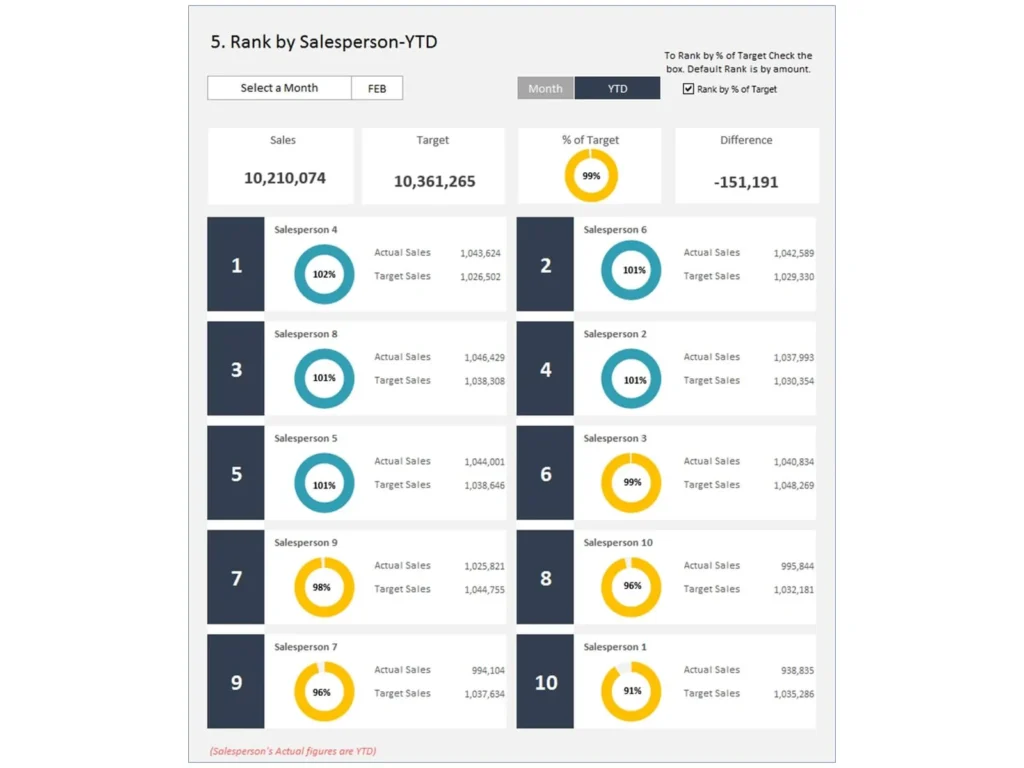
What Is a Salesperson Performance Dashboard and Why It Matters
A Salesperson Performance Dashboard is a focused reporting tool that helps businesses monitor the results, activity, and efficiency of each salesperson in one place. In simple terms, a dashboard is a visual display of the most important performance indicators that support better decisions. It helps leaders review output, compare individual sales results, and understand how the broader sales team’s work is contributing to business goals. A well-structured Sales Dashboard gives managers a clear picture of sales activity and outcomes. This visibility matters because it helps identify strengths, address weak areas, and create better conditions for successful sales performance.
How a Sales Dashboard Improves Team Visibility and Sales Performance
A good Sales Dashboard improves visibility by presenting activity, productivity, and closing results in one structured view. It allows leaders to monitor team performance, compare individuals, and identify whether the sales team’s effort is leading to the desired outcomes. Since dashboard provides immediate access to important information, managers can respond faster when results start slipping. It is also helpful for recognizing top performers and finding areas where coaching is needed. When businesses use dashboards consistently, they gain stronger control over sales performance metrics, improve communication, and make it easier to improve sales performance across the whole team.
Why Businesses Use a Salesperson Performance Dashboard Excel Template
Many businesses choose a Salesperson Performance Dashboard excel file because it offers a practical and flexible way to report performance without relying on complex systems. A ready-made Sales Salesperson Performance Dashboard template saves time, creates consistency, and makes it easier to compare results period after period. It can organize data from sales activities, targets, conversions, and revenue into one useful structure. A professional template also improves reporting discipline because the same measures are tracked every time. This makes it easier for management to review the team, monitor trends, and maintain a consistent standard for evaluating salesperson effectiveness.
Core Benefits of a Salesperson Performance Dashboard
Improving Team Performance with a Performance Dashboard
A performance dashboard helps organizations improve execution by making results visible and measurable. It allows managers to review the team’s performance against targets, identify weak spots, and focus on corrective action. When performance is shown clearly, it becomes easier to close performance gaps before they become bigger problems. A strong Salesperson Performance Dashboard also supports accountability because team members can see how their output compares with expectations. Over time, this type of structured reporting improves focus, encourages consistency, and helps create a stronger environment for best sales practices across the organization.
How a Dashboard Helps Sales Teams Monitor Productivity and Results
A dashboard helps teams connect activity with outcomes. It can show how many calls, meetings, proposals, and closed deals each rep is producing, along with the revenue linked to those efforts. This supports better visibility into sales productivity and makes it easier to understand whether effort is leading to results. Because the dashboard allows sales leaders to review daily or weekly progress, they can respond more quickly when performance starts falling. It also encourages better discipline because representatives know their work is being measured clearly. This makes dashboards highly valuable for both managers and frontline teams.
Using Analytics and BI Insights for Better Sales Decisions
Analytics make dashboards much more powerful because they help explain not just what happened, but why. When businesses combine dashboard reporting with analytics and bi tools, they can study patterns in conversion, follow-up speed, quota attainment, and deal progression. These insights help leaders refine strategy and make better decisions. They also support more accurate coaching and better planning. By reviewing performance data regularly, managers gain stronger insight into sales outcomes and can identify which practices drive stronger results. This is why many modern teams treat analytics as an essential part of performance management.
Key Metrics in a Salesperson Performance Dashboard
Essential KPIs Every Sales Team Should Track
Every Salesperson Performance Dashboard should include the core kpis that reflect both output and efficiency. These often include revenue generated, pipeline value, activity volume, quota attainment, opportunity count, and average deal size. These measures help leaders understand how the team is performing at a glance. They also create a common language for evaluating the sales team’s contribution. Since dashboards are meant to simplify performance review, choosing the right metrics is critical. The most useful dashboards focus on a manageable set of indicators that help leaders track success and intervene where performance needs attention.
Monitoring Win Rate, Conversion Rate, and Productivity
Some of the most important sales performance metrics in a dashboard are win rate, conversion rate, and productivity measures. These show how well a salesperson turns leads into opportunities and opportunities into closed deals. High activity without good conversion may indicate weak qualification or poor messaging. On the other hand, strong conversion with low activity may suggest underused potential. A good dashboard helps managers interpret these differences and respond effectively. By reviewing these indicators regularly, companies can identify patterns, strengthen coaching, and improve outcomes across both individual sales contributors and the overall team.
Measuring Sales Performance with Custom Sales Metrics
Not every business should use the exact same dashboard. In many cases, custom sales metrics are needed to reflect the company’s process, products, or customer journey. For example, one team may focus on account renewals, while another tracks meetings-to-demo ratios or proposal quality. Since dashboards can be tailored to fit the business, they become more useful when they include measures that reflect actual priorities. A customized Salesperson Performance Dashboard helps leaders evaluate the metrics that truly matter. This makes reporting more relevant, improves decision-making, and supports more accurate management of real performance drivers.
Sales Dashboard Metrics and Reporting
Important Sales Dashboard Metrics for Better Team Performance
A well-built Sales Dashboard should present the metrics that best explain behavior and results. These may include closed revenue, average deal value, open opportunities, response time, quota progress, and activity totals. Together, these sales performance metrics help managers understand where strong execution is happening and where intervention is required. A dashboard that emphasizes the right numbers makes team review much easier. It also improves alignment because everyone sees the same expectations. When metrics are selected carefully, the dashboard becomes more than a report. It becomes a practical management tool for better performance and stronger accountability.
Using a Sales Performance Dashboard for Individual and Team Analysis
One of the key strengths of using a sales performance dashboard is that it supports both individual and team-level review. Managers can examine the results of a single salesperson while also comparing broader team averages and trends. This makes it easier to identify whether weak performance is isolated or part of a wider issue. It also helps leaders see who is driving revenue and who needs support. A good dashboard balances individual insight with overall perspective so leaders can manage both coaching and strategy. This dual view is essential for building stronger teams and better business outcomes.
How Dashboard Examples Support Better Reporting Design
Looking at performance dashboard examples and a good sales dashboard example can help businesses design more useful reports. Examples show how other teams organize metrics, compare individuals, and display trends in ways that are easier to understand. This reduces guesswork and helps businesses avoid cluttered or confusing layouts. Studying examples is especially helpful when teams want to create a sales dashboard from scratch. It can improve both design quality and practical usability. By learning from proven structures, companies can build dashboards that are easier to use, easier to update, and more valuable in management discussions.
Salesperson Performance Dashboard Excel Features
How Salesperson Performance Dashboard Excel Simplifies Reporting
A Salesperson Performance Dashboard excel workbook simplifies reporting because it brings calculations, trend views, and summary charts into one place. It can organize data from your crm or manually entered sales records into a structured reporting format that supports quick review. This makes it easier to monitor quotas, productivity, and closing activity without switching between multiple files. Excel is especially useful for teams that want flexibility and control over report structure. Since many organizations already work in spreadsheets, it remains a practical option for building reports that are both functional and cost-effective.
Building an Interactive Dashboard with Clear Visual Metrics
An interactive dashboard makes reporting far more useful. Filters for rep, date, product, or territory allow users to move from high-level summary to detailed review within seconds. This makes the dashboard more dynamic and more useful in meetings. Because the dashboard is designed to support quick decisions, clean charts and clear visual comparisons are essential. A well-built interactive Sales Dashboard helps managers focus on trends, exceptions, and progress rather than reading long tables. It also encourages regular use, which is one reason interactive reports are becoming a standard in modern sales dashboards.
Why a Salesperson Performance Dashboard Template Saves Time and Improves Accuracy
A reliable Sales Salesperson Performance Dashboard template saves time because teams no longer need to rebuild the reporting structure each period. They can update the latest figures, review results, and move quickly into analysis. Templates also improve accuracy because the same formulas, charts, and logic are reused consistently. This reduces the risk of reporting errors and makes comparisons more dependable. For businesses that want efficient performance review, templates provide a practical foundation. They support standardization, reduce repetitive work, and make it easier to scale reporting as the sales team grows.
Dashboard Examples and Practical Use Cases
Learning from Sales Dashboard Example and Performance Dashboard Examples
A strong sales dashboard example can inspire better structure, cleaner layout, and more useful reporting practices. Reviewing performance dashboard examples helps businesses understand how to display revenue, productivity, quota progress, and trends in ways that support management action. Examples are especially helpful when teams want to improve usability or design a dashboard for a different audience. They also help identify which metrics deserve priority. By studying examples, businesses can create more practical dashboards that are easier for managers and teams to understand and use consistently in real work situations.
Using a Sales Performance Dashboard in Salesforce and BI Environments
Many businesses connect their dashboards to systems like salesforce and bi platforms so that the reporting is based on more current information. Pulling data from your crm helps reduce manual work and creates stronger consistency across reports. This also improves visibility into pipeline, conversions, and rep activity. When dashboards are connected to live systems, they become more useful for real-time decisions and team review. These environments are especially helpful for companies with larger teams or more complex workflows. They allow dashboards to become a stronger part of daily management, strategy, and sales enablement efforts.
Choosing the Best Sales Dashboard for Modern Sales Teams
The best sales dashboard is one that is clear, relevant, and easy to use. It should focus on the most important performance measures without overwhelming the user. For modern teams, the best reports also need to adapt to different roles, reporting needs, and sales motions. That is why many businesses now invest in effective sales dashboards that balance simplicity with insight. The most useful dashboard is not always the most complex one. Instead, it is the one that fits the team’s workflow, supports decision-making, and helps turn reporting into practical action for stronger performance.
Customization and Business Value
How to Create a Sales Dashboard That Fits Your Team Goals
To create a sales dashboard that truly supports the business, leaders must begin with the goals they want to manage. The dashboard should reflect the company’s quota structure, sales cycle, customer journey, and reporting culture. Different teams may care about different measures, such as sales quota, opportunity aging, or response time. Since every team works differently, the dashboard should match real priorities rather than generic reporting ideas. When it is designed around actual needs, it becomes much easier to use and much more valuable for managers, executives, and the sales team itself.
Using Custom Sales KPIs to Improve Performance Tracking
Standard measures are useful, but sometimes teams need additional indicators to reflect their real work. This is where custom sales KPIs become valuable. They may include product mix, follow-up compliance, renewal conversion, or deal speed depending on the business. These metrics help businesses track what actually matters in their sales environment. By including custom indicators, companies can better identify performance trends, diagnose weak areas, and strengthen strategy. Customized KPI tracking also makes the dashboard more relevant to each role, which improves engagement and supports better day-to-day use by management and the sales team.
Turning Dashboard Insights into Better Sales Performance
A dashboard creates value only when its insights are used to improve action. The purpose of a Salesperson Performance Dashboard is not just to show numbers, but to guide better coaching, stronger execution, and smarter planning. By reviewing performance regularly, managers can close performance gaps, support sales enablement, and help the team adopt more effective behaviors. This is how dashboards contribute to best-in-class sales practices over time. When leaders act on what the dashboard shows, they can sharpen focus, increase accountability, and create conditions that lead to more predictable and profitable results.
Conclusion
Why a Salesperson Performance Dashboard Template Is a Practical Business Tool
A Sales Salesperson Performance Dashboard template is a practical business tool because it combines consistency, visibility, and efficiency in one structure. It helps organizations review team performance, compare individuals, and monitor key metrics without building new reports every period. It also supports stronger discipline in performance review and better communication across leadership and frontline teams. Because the template format saves time and improves reliability, it gives businesses a dependable way to manage performance and support growth. For many teams, this makes a dashboard one of the most useful reporting tools available.
Final Thoughts on Using a Sales Performance Dashboard for Better Team Visibility
A well-designed sales performance dashboard gives leaders a clearer understanding of how the team is working, where results are strong, and where support is needed. It brings together activity, conversion, quota, and trend information into one useful view. More importantly, it helps businesses translate performance data into better action. When organizations commit to regular dashboard review, they improve visibility, strengthen coaching, and create more confidence in decisions. Over time, this leads to stronger productivity, better alignment, and improved results across the sales function.
For ready-to-use Dashboard Templates: