
Introduction to Sales Team Dashboard
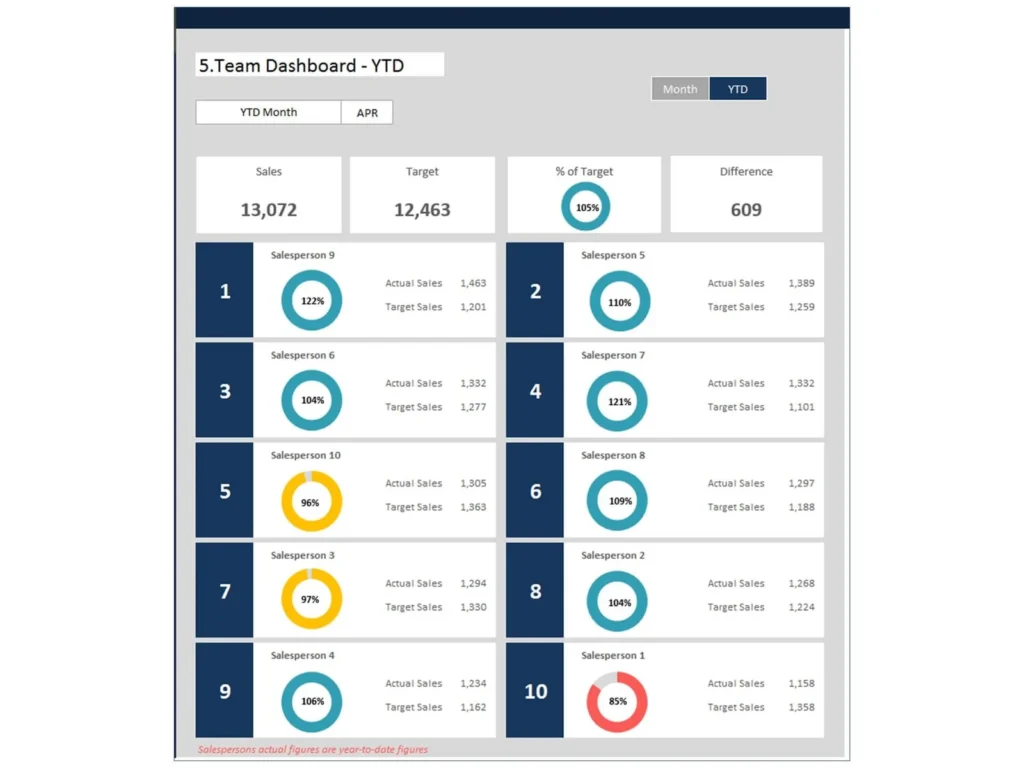
What Is a Sales Team Dashboard and Why It Matters
A Sales Team Dashboard is a central reporting tool that brings together the most important sales numbers, trends, and activities into one place. In simple terms, a sales dashboard is a visual display of performance data that helps businesses monitor results more clearly. It gives managers and teams a quick view of your sales, including pipeline movement, activities, and revenue progress. A well-built Sales Dashboard helps teams focus on the right sales priorities instead of reviewing scattered reports. Because the dashboard presents key results in one place, it gives a clearer picture of sales and supports better day-to-day decisions.
How a Sales Dashboard Helps Track Sales Team Performance
A strong Sales Dashboard makes it easier to track sales performance across the full team. It can show sales kpis, rep results, activity levels, conversion rates, and progress toward sales targets. This helps leadership understand whether the sales team’s performance is improving, stable, or falling behind. A good dashboard also makes it easier to spot gaps between effort and outcomes. Since sales dashboards allow managers to compare results quickly, they can respond faster with coaching or changes in focus. This is one reason so many organizations now use a dashboard as part of their regular management process.
Why Businesses Use a Sales Team Dashboard Excel Template
Many businesses choose a Sales Team Dashboard template because it provides a ready-made structure for practical reporting. A well-designed Sales Team Dashboard excel file can combine charts, tables, and performance metrics into one easy-to-use format. This saves time and improves consistency. A sales dashboard template is helpful for teams that want to monitor pipeline, activities, and results without building everything from scratch. It also supports easier sharing across the sales organization. When companies use this dashboard, they get a reliable framework to review goals, compare outcomes, and improve reporting quality across both leadership and field teams.
Core Benefits of a Sales Team Dashboard
Improving Sales Performance with an Effective Sales Dashboard
An effective sales dashboard helps companies improve execution by organizing the most important numbers in one place. It gives managers access to sales performance metrics, trend views, and rep-level outcomes that support smarter action. When leaders can see performance clearly, they can adjust sales strategies more quickly and focus on areas that will create stronger results. A good Sales Team Dashboard can highlight where more effort is needed, where performance is strong, and where pipeline weaknesses may affect future revenue. This type of dashboard is especially valuable for businesses trying to improve consistency and create best sales practices across the team.
How Sales Dashboards Help Sales Managers and Sales Reps
Sales dashboards help both leaders and team members work more effectively. For a sales manager, the dashboard offers an easy way to monitor pipeline health, target progress, and team output. For a sales representative, it provides visibility into activity goals, opportunities, and personal results. This shared visibility creates stronger accountability across the team. Since everyone can review the same numbers, conversations become more focused and fact-based. A well-designed sales manager dashboard also improves communication because it aligns expectations and performance reviews. This is how dashboards support better teamwork and help the organization stay focused on the right sales dashboard priorities.
Using Sales Reporting and Sales Analytics for Better Decisions
Good dashboards are built on strong sales reporting and useful insights from analysis. They help managers move beyond raw numbers and start interpreting what those numbers mean. A sales analytics dashboard can reveal patterns in conversion, activity, opportunity quality, and sales and revenue trends. This makes decision-making faster and more accurate. When the dashboard uses reliable data, it supports accurate sales planning and clearer management action. Strong analytics also help businesses understand what drives wins and where deals slow down. In that sense, a dashboard does more than report history; it actively helps sales leaders plan for better performance.
Key Metrics in a Sales Team Dashboard
Essential KPI Dashboard Metrics for Sales Team Success
A strong kpi dashboard should include the most relevant key performance indicators for the sales function. These usually include revenue, conversion rate, win rate, average deal size, activity count, and target attainment. These sales kpis show whether the team is making enough progress toward goals and whether effort is translating into results. A good Sales Team Dashboard gives managers quick access to these measures so they can evaluate team health at a glance. Because dashboards highlight the most important numbers, they help keep attention on measurable business outcomes and support a disciplined, performance-focused culture.
Tracking Sales Activity, Sales Opportunities, and Revenue Growth
A complete Sales Dashboard should not focus only on final revenue. It should also track the actions and pipeline that lead to revenue. This includes sales activity, open deals, follow-up efforts, and sales opportunities by stage or value. It may also show trends in revenue growth so managers can compare current performance with previous periods. These views help leaders understand whether current effort is strong enough to support future success. When a dashboard connects activity and outcomes, it becomes easier to evaluate productivity and improve results. This is one reason many companies rely on a sales opportunities dashboard for team review.
Measuring Sales Rep Output, Team Results, and Sales Data Trends
A useful Sales Team Dashboard should compare individual contribution with overall team performance. This helps managers understand whether results are being driven by one top seller or by balanced team output. Reviewing sales data trends also helps leadership see whether changes are short-term or part of a broader pattern. A dashboard can show calls made, proposals sent, wins closed, and target achievement at both individual and team level. This gives a fuller picture of performance. Over time, trend views help management identify skill gaps, workload issues, and growth opportunities across the broader sales organization.
Sales Pipeline and Opportunity Monitoring
Using a Sales Pipeline Dashboard to Track Pipeline Health
A sales pipeline dashboard is one of the most valuable parts of a reporting system because it gives visibility into future business. It shows how many deals are in progress, their value, and where they sit in the sales funnel. By reviewing this information regularly, leaders can see if the pipeline is healthy enough to support upcoming targets. A strong Sales Team Dashboard also helps managers notice delays, gaps, and weak stages. This improves planning and opportunity management. Since pipeline visibility is essential for long-term success, many businesses rely on a dedicated sales pipeline dashboard as a core reporting view.
Managing Sales Opportunities with a Sales Opportunities Dashboard
A sales opportunities dashboard focuses on open deals and helps managers prioritize the best ones. It can show opportunity value, expected close dates, stage status, and follow-up needs. This makes it easier to allocate time toward the deals most likely to close. The dashboard can also help identify which opportunities are stalled and which need additional support. Since opportunity quality affects outcomes, this view is important for improving close rates and resource use. When leaders have one place to monitor sales opportunities, they can manage the pipeline more actively and guide the team toward stronger conversion and improved performance.
Forecasting Revenue with Sales Forecasting and Forecasting Dashboard Views
Good reporting is not only about reviewing past performance. It is also about planning ahead. Sales forecasting helps businesses estimate future outcomes based on current pipeline, stage conversion, and target pacing. A well-designed forecasting dashboard supports that process by showing expected revenue, probable close values, and pipeline coverage. This allows leaders to prepare more effectively and adjust action before problems become too large. In many cases, sales leaders need a forecasting view to support strategic decision-making, hiring plans, and capacity management. For this reason, forecasting is a key feature in a strong modern sales dashboard.
Sales Team Dashboard Excel Features
How Sales Team Dashboard Excel Simplifies Sales Reporting
A well-built Sales Team Dashboard excel file simplifies sales reporting by bringing all important views into one workbook. It can pull data from multiple sheets, summarize activity, and present charts for quick review. This reduces manual effort and helps teams maintain a consistent reporting process. Excel is often preferred because it is flexible, familiar, and easy to customize. A dashboard in Excel can track revenue, activities, and forecasts without expensive software. Since many businesses already work in spreadsheets, it is a practical choice for regular reporting. This is why many teams continue to use the dashboard format in Excel for everyday decision support.
Building a Dashboard with Interactive Sales Data and Filters
When teams build a dashboard, interactivity makes the report much more useful. Filters for rep, region, product, or time period allow users to move from summary to detail quickly. This makes it easier to understand specific issues without building multiple separate reports. A dashboard with interactive sales data helps users answer questions during meetings and identify trends more quickly. It also improves collaboration because the same dashboard can serve different audiences. Whether leadership wants a summary or a manager wants detail, interactive views make the report more practical. This flexibility is a major strength of a Sales Team Dashboard template.
Why a Sales Team Dashboard Template Saves Time and Improves Accuracy
A Sales Team Dashboard template saves time because it gives users a fixed structure for reporting. Instead of rebuilding charts and formats each period, teams can simply update the data and review results. This improves consistency and reduces the risk of reporting errors. Templates also help standardize the way performance is discussed across the company. When everyone reviews the same dashboard structure, communication becomes clearer. A reliable sales dashboard template also helps ensure that important sections are never missed. For businesses that need fast, regular reporting, a template is one of the most practical tools available.
Performance Management for Sales Reps and Managers
How a Sales Performance Dashboard Supports Sales Rep Coaching
A sales performance dashboard is a practical tool for coaching because it shows the numbers behind results. Managers can review activities, opportunity movement, conversion, and achieved revenue for each sales representative. This helps identify whether weak results come from low activity, poor conversion, or poor opportunity quality. Coaching becomes more productive because it is based on facts rather than opinion. A dashboard also helps reps see their own performance more clearly and understand where they need to improve. Since strong coaching is essential to growth, dashboards play an important role in building skill, discipline, and more consistent execution.
Why a Sales Manager Dashboard Improves Team Oversight
A sales manager dashboard improves oversight by giving managers one place to review the whole team. It can show individual contribution, pipeline movement, key activities, target progress, and forecast views together. This makes it easier for leaders to identify risks and respond quickly. Since managers often balance strategy, coaching, and reporting, a clear dashboard helps them work more efficiently. It also allows them to see which reps need support and where momentum is strongest. By improving visibility across the team, the dashboard strengthens management quality and helps create a more responsive and better-coordinated sales environment.
Comparing Individual and Team Sales Performance Effectively
Comparing individual and team results helps leaders understand whether the business is improving broadly or relying too much on a few top performers. A dashboard can show side-by-side comparisons of activity, wins, and target achievement. This helps managers evaluate the sales team’s performance more fairly and identify where support is needed. It also helps reveal what best practice looks like inside the company. In many cases, comparing team and individual results helps leadership build stronger coaching plans and improve planning. This supports better balance between short-term execution and long-term capability development across the whole team.
Sales Dashboard Examples and Design Ideas
Learning from Sales Dashboard Examples and 10 Sales Dashboard Examples
Reviewing sales dashboard examples is one of the best ways to improve dashboard design. By studying 10 sales dashboard examples, teams can see how others organize KPI cards, charts, pipeline sections, and rep views. These examples help businesses identify layouts that are easier to read and more useful in practice. They can also inspire new ideas for filtering, comparison views, and reporting structure. Learning from examples reduces trial and error when teams build a dashboard. It helps businesses create more practical reports and identify which features matter most for their own reporting process.
What Makes the Best Sales Dashboard for Modern Teams
The best sales dashboard is one that balances simplicity, clarity, and actionability. It should highlight the most relevant sales kpis, show pipeline status, and provide quick insight into rep and team performance. A great sales dashboard should not overload users with too much data. Instead, it should focus on what leadership and teams really need to know. In today’s environment, a modern sales dashboard should also be interactive, visually clean, and easy to update. These qualities make it easier for teams to use the dashboard regularly and turn reporting into better action.
How to Build Custom Sales Dashboards for Your Team
Every company has different products, processes, and reporting needs, which is why many teams choose to build custom sales dashboards. A customized dashboard can include industry-specific KPIs, company-specific targets, and different views for managers, reps, and executives. This makes the dashboard more relevant and practical for daily use. Businesses may want custom sales metrics for account retention, regional mix, or product profitability. When teams build custom views around their actual workflow, the dashboard becomes a more powerful management tool. It also helps make reporting more meaningful for everyone involved in the sales process.
Conclusion
Why a Sales Team Dashboard Template Is a Practical Business Tool
A Sales Team Dashboard template is a practical business tool because it combines visibility, structure, and flexibility in one place. It helps businesses monitor progress toward sales targets, review sales reporting, and keep attention on the most important measures. Since the dashboard can be updated regularly and shared across the company, it supports better communication and stronger management discipline. It is also a practical way to align team action with strategic goals. For businesses that want better visibility and faster reporting, a template-based dashboard offers a simple and effective solution.
Final Thoughts on Using a Sales Dashboard for Team Performance and Growth
A well-designed Sales Dashboard gives leaders and teams a clearer view of your sales, a better understanding of pipeline health, and a more structured way to manage results. It helps organizations review performance, guide coaching, and improve planning with confidence. Whether the goal is to support rep development, strengthen forecasts, or improve revenue results, dashboards add real value. As teams look for examples for 2026 and beyond, the focus should remain on clarity, usability, and relevance. When businesses use your sales data effectively, dashboards become powerful tools for sustainable growth and stronger performance.
For ready-to-use Dashboard Templates: