
Overview of the Pharmaceuticals Sector HR Dashboard
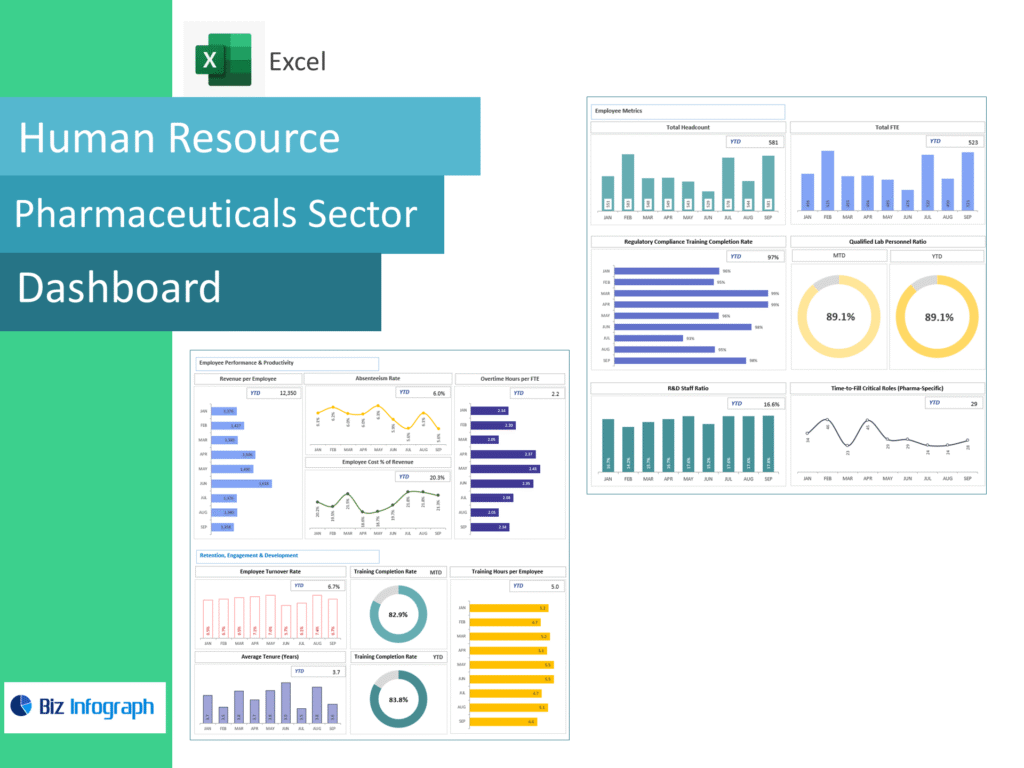
What a Pharmaceutical HR Dashboard Is and Its Role in the Pharmaceutical Industry
A pharmaceuticals sector HR dashboard is a specialized dashboard designed to support human resource management in the highly regulated field of pharmaceuticals. Unlike generic HR tools, this dashboard addresses industry-specific workforce needs such as compliance with regulatory standards, R&D workforce planning, production quality support, and talent segmentation across specialized roles. It consolidates HR data into a single dashboard that delivers clarity, consistency, and control.
In the pharmaceutical industry, people are a critical asset, from scientists and R&D specialists to manufacturing and field teams. A dedicated HR dashboard provides valuable insights into workforce structure, performance over time, and organizational alignment. By bringing together HR analytics, pharma KPIs, and workforce metrics, the dashboard helps organizations connect human capital decisions with broader business goals and growth potential.
How an HR Dashboard Supports Pharma HR and Workforce Management
An HR dashboard supports pharma HR teams by simplifying workforce monitoring and decision-making. Pharmaceutical businesses operate complex workflows across R&D, manufacturing, marketing, and regulatory functions. An HR dashboard enables HR teams to monitor employee performance, workforce capacity, and organizational effectiveness in real time.
By centralizing HR analytics, the dashboard allows pharmaceutical companies to identify bottlenecks, manage lead time in hiring or training, and optimize workforce deployment. It also supports automation of routine reporting tasks, freeing HR professionals to focus on strategic initiatives. Through actionable insights and data-driven views, the dashboard helps HR teams align workforce strategies with organizational goals and business leaders’ expectations.
Dashboard Example for HR Analytics in the Pharma Industry
A dashboard example for HR analytics in the pharma industry typically includes visualizations for workforce distribution, performance indicators, compliance tracking, and talent segmentation. Such examples show how pharma HR dashboards integrate HR data with operational and R&D workforce requirements.
These dashboard examples demonstrate how HR analytics dashboards provide real-time insights into employee performance, productivity, and engagement. By reviewing examples, organizations can see how dashboards deliver actionable intelligence that supports informed decision-making. A well-designed dashboard example highlights best practices in usability, clarity, and alignment with pharmaceutical business needs.
HR KPIs, Metrics, and Key Performance Indicators
Key Performance Indicators and Pharmaceutical KPIs Tracked in an HR Dashboard
A pharmaceutical HR dashboard tracks key performance indicators that reflect workforce effectiveness and compliance. Common pharma KPIs include employee performance metrics, training completion rates, workforce availability, and turnover trends. These KPIs help organizations understand how human capital supports R&D productivity, production quality, and market execution.
By presenting pharmaceutical KPIs in one place, the dashboard simplifies performance tracking and reporting. HR leaders can monitor KPIs consistently and identify areas requiring intervention. This visibility ensures that workforce performance aligns with both operational requirements and long-term strategic objectives.
Using KPIs and Metrics to Measure Key Performance
Using KPIs and metrics effectively is essential for measuring HR performance in the pharmaceutical industry. Dashboards transform raw HR data into structured metrics that reflect organizational health. Metrics such as performance over time, lead time for recruitment, and workflow efficiency provide insight into HR effectiveness.
By analyzing these metrics, HR teams can assess whether workforce strategies support business goals. Dashboards enable segmentation by role, department, or location, supporting targeted interventions. This analytical approach ensures that HR performance measurement drives continuous improvement rather than static reporting.
KPI Dashboard for Monitoring Pharma HR Performance
A KPI dashboard for pharma HR performance provides a centralized view of workforce metrics that matter most. It allows HR teams and stakeholders to monitor trends, compare performance across units, and track progress against targets.
The KPI dashboard supports regular reviews and strategic planning by making HR data accessible and actionable. With real-time insights, organizations can respond quickly to workforce challenges, improve productivity, and support organizational growth.
Analytics, BI, and Interactive Dashboards
Using Analytics and BI in a Pharmaceutical HR Dashboard
Analytics and business intelligence (BI) elevate pharmaceutical HR dashboards from reporting tools to strategic assets. By applying data analytics, dashboards identify patterns in workforce performance, compliance, and engagement. BI capabilities allow HR professionals to explore data interactively and uncover root causes of issues.
These insights support data-driven HR strategies that align with pharmaceutical business priorities. Analytics dashboards enable scenario analysis and forecasting, helping organizations anticipate workforce needs and risks. This analytical depth is critical in the pharma industry, where talent decisions have long-term implications.
Interactive Dashboard Capabilities for Pharma HR Teams
A fully interactive dashboard empowers pharma HR teams to explore data dynamically. Interactive features allow users to filter, drill down, and segment data by role, department, or project. This interactivity enhances understanding and engagement with HR data.
Interactive dashboards are user-friendly and support collaboration among HR teams, business leaders, and stakeholders. By enabling exploration rather than static viewing, interactive dashboards help identify areas for improvement and support informed decision-making.
Turning HR Data into Actionable Performance Indicators
Turning HR data into actionable performance indicators is the core value of a pharmaceutical HR dashboard. Dashboards consolidate data from multiple sources and transform it into clear, actionable insights. These indicators highlight workforce strengths, risks, and opportunities.
Actionable indicators enable HR teams to address bottlenecks, improve workflows, and support organizational objectives. By delivering insights that lead to action, dashboards ensure that HR analytics contribute directly to business success.
HR Dashboard Templates, Best Practices, and Challenges
Using an HR Dashboard Template for the Pharmaceutical Industry
An HR dashboard template accelerates implementation by providing predefined metrics and layouts tailored to the pharmaceutical industry. Templates are often editable and ready-to-use, allowing organizations to customize dashboards to their needs quickly.
Templates ensure consistency in KPI definitions and reporting standards. By using templates, pharmaceutical companies can deploy dashboards efficiently and focus on analysis rather than design.
Best Practices for Building a Pharma HR Dashboard
Best practices for building a pharma HR dashboard include clarity, relevance, and alignment with business goals. Dashboards should focus on key HR metrics that support compliance, performance, and growth.
User-friendly design and automation enhance adoption and effectiveness. Regular reviews ensure that dashboards remain aligned with evolving organizational needs and regulatory requirements.
Common Challenges in Implementing HR Dashboards in the Pharma Industry
Common challenges in implementing HR dashboards include data integration, compliance concerns, and change management. Pharmaceutical organizations must ensure data accuracy and security while integrating HR systems with other platforms.
Addressing these challenges requires careful planning, stakeholder engagement, and adherence to best practices. Overcoming implementation challenges ensures that dashboards deliver their full benefits.
FAQs and Practical Considerations
Frequently Asked Questions About Pharmaceutical HR Dashboards
Frequently asked questions about pharmaceutical HR dashboards often relate to compliance, data sources, and usability. Organizations want to know how dashboards support regulatory requirements and protect sensitive data.
Clear answers help build confidence and encourage adoption. FAQs also clarify how dashboards deliver value and support HR objectives.
Selecting the Right KPI Dashboard for Pharma HR
Selecting the right KPI dashboard involves assessing organizational needs, data availability, and user requirements. The right dashboard should align with pharmaceutical KPIs and support strategic decision-making.
Considerations include scalability, interactivity, and ease of use. Choosing the right dashboard ensures long-term value and adoption.
Aligning HR Dashboards with Pharmaceutical Industry Requirements
Aligning HR dashboards with pharmaceutical industry requirements ensures relevance and compliance. Dashboards should reflect regulatory standards, R&D workforce needs, and production quality considerations.
This alignment supports organizational goals and enables HR teams to contribute effectively to business success.
Conclusion
A Pharmaceuticals Sector HR Dashboard is a powerful tool for managing human capital in a complex, regulated industry. By combining analytics, KPIs, and interactive insights, dashboards enable pharma organizations to make informed, data-driven decisions that support compliance, performance, and sustainable growth.
For ready-to-use Dashboard Templates: