
Introduction to HR Training Dashboard
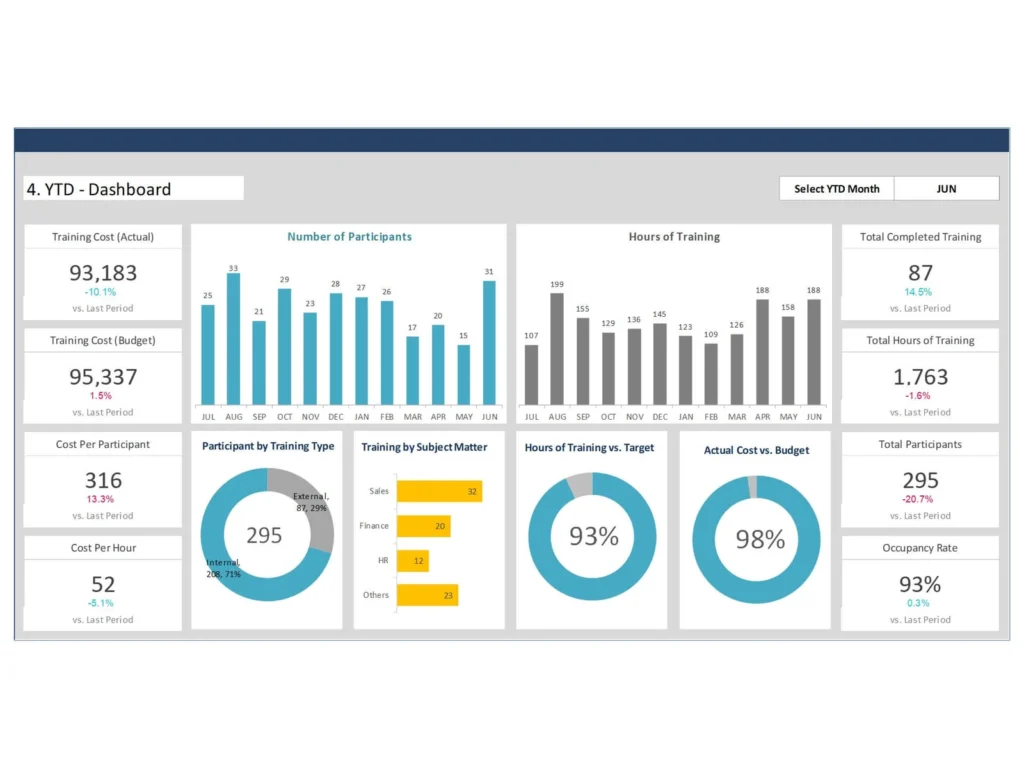
What Is an HR Training Dashboard in Modern Human Resource Management
An HR Training Dashboard is a specialized HR dashboard designed to monitor employee learning, training progress, and workforce development through training data and metrics. In modern HR environments, HR professionals rely on dashboards and HR reports to track employee training activities and evaluate the value of your training programs.
The HR Training Dashboard provides insights into employee training performance by displaying key workforce metrics such as total training hours, training completion rates, and training progress. HR managers and HR executives can use the dashboard to evaluate training effectiveness and measure how training initiatives contribute to workforce development.
This type of employee training dashboard integrates HR data from HR tech platforms, learning management systems, and HR analytics tools. The dashboard gives HR leaders a clear overview of training and development initiatives across departments. By using HR dashboards, organizations can track training status, measure training impact, and support strategic workforce development.
Why Organizations Use HR Training Dashboard Excel and Dashboard Templates
Organizations frequently use HR Training Dashboard Excel solutions because they provide flexible and customizable tools to track training metrics and generate dashboards and HR reports. An HR Training Dashboard template enables HR professionals to structure training data in a visual format that simplifies training analysis.
Excel templates allow HR teams to track training hours per employee, training completion rates, and employee attendance in training programs. These dashboards also allow HR professionals to analyze training progress and identify skill gaps within the workforce.
Using a dashboard template helps HR teams maintain consistent HR reporting and track training metrics efficiently. HR managers can customize templates to include different HR dashboards such as recruitment dashboards, learning and development dashboards, and performance dashboards. These templates enable HR teams to align training initiatives with workforce development goals.
Role of HR Dashboard in Training and Development Reporting
The HR dashboard plays a crucial role in training and development reporting. The HR Training Dashboard allows HR teams to track training activities, analyze training data, and evaluate the effectiveness of employee training programs.
The dashboard provides real-time insights into training performance metrics and workforce development indicators. HR professionals can monitor training completion rates, training hours per employee, and participation levels across departments.
Regular reporting enables HR executives to understand the overall training impact on workforce productivity. HR dashboards and HR reports provide HR managers with insights that support strategic learning and development decisions. By using the dashboard tool, organizations can improve training planning and strengthen employee development strategies.
Key Training Metrics in HR Training Dashboard
Understanding Training Metrics and Key Performance Indicators
Training metrics and KPIs are essential indicators used to measure employee learning outcomes and training program effectiveness. The HR Training Dashboard allows HR professionals to track key metrics related to workforce training and development.
Common training KPIs include total training hours, training completion rates, training attendance, and employee participation in learning programs. These metrics help HR managers evaluate the effectiveness of training initiatives and determine whether employees acquire the necessary skills.
The dashboard provides insights into these critical metrics, allowing HR teams to track workforce learning progress and analyze training trends. HR professionals track these metrics to ensure training programs support organizational goals and workforce development strategies.
Tracking Employee Training Progress Using Training Data
Tracking employee training progress is one of the most important functions of the HR Training Dashboard. By analyzing training data, HR professionals can monitor employee participation in training programs and measure training progress across departments.
The employee training dashboard displays metrics such as training hours per employee, training completion rates, and training status. These indicators help HR managers determine whether employees are meeting training objectives.
Tracking training progress also helps HR teams identify employees who may require additional training or support. By analyzing training metrics through dashboards, HR professionals can improve training planning and ensure workforce skills align with organizational requirements.
Monitoring Workforce Development Through Training Metrics
Training metrics provide valuable insights into workforce development and employee skill growth. The HR Training Dashboard allows HR teams to monitor workforce learning trends and evaluate the effectiveness of learning and development programs.
Metrics such as training completion rates, employee attendance in training programs, and overall training hours help HR managers measure workforce development progress. These metrics also allow HR professionals to evaluate whether training programs contribute to employee performance improvement.
Monitoring workforce development through dashboards enables HR leaders to adjust training strategies and enhance learning opportunities for employees.
HR Training Dashboard in Learning and Development Strategy
Role of HR Training Dashboard in Training and Development Programs
The HR Training Dashboard plays an essential role in supporting training and development programs. HR teams use the dashboard to monitor employee learning activities and track training progress across departments.
Learning and development dashboards allow HR managers to evaluate whether training initiatives align with workforce development goals. By analyzing training metrics and HR data, HR professionals can identify skill gaps and design targeted training programs.
This data-driven approach helps organizations improve training effectiveness and ensure employees receive the necessary training to perform their roles effectively.
Using BI and Analytics Tools to Evaluate Training Effectiveness
Business intelligence and analytics tools enhance the capabilities of the HR Training Dashboard by providing advanced insights into training performance. Platforms such as Power BI allow HR teams to build interactive dashboards that analyze training data more effectively.
BI dashboards allow HR professionals to track training metrics such as training completion rates, training hours per employee, and participation trends. These dashboards also provide visual reports that make it easier for HR executives to evaluate training impact.
By using HR analytics tools and BI platforms, organizations can evaluate training effectiveness and ensure training programs contribute to workforce productivity.
Improving HR Reporting with Training Dashboard Insights
Training dashboards improve HR reporting by presenting training data in clear and visual formats. HR professionals can generate dashboards and HR reports that highlight training performance metrics and workforce learning progress.
The dashboard provides insights into employee training activities and helps HR managers identify trends that affect workforce development. These insights enable HR teams to make data-driven decisions related to training strategies.
Improved HR reporting ensures HR executives have accurate information about training outcomes and workforce capabilities.
HR Training Dashboard Examples and Use Cases
HR Training Dashboard Example for Workforce Skill Development
An HR Training Dashboard example for workforce skill development typically includes metrics such as total training hours, training completion rates, and participation levels in training programs. These dashboards allow HR managers to evaluate workforce skill development and training progress.
Employee Training Dashboard Example for Training Performance Monitoring
An employee training dashboard example focuses on monitoring training performance metrics such as employee attendance, training hours per employee, and completion rates.
Training Dashboard Example for HR Reporting and KPI Tracking
Training dashboard examples often highlight key metrics and KPIs related to workforce learning and development.
Building an HR Training Dashboard Template in Excel
Designing an HR Training Dashboard Excel Template
Designing an HR Training Dashboard Excel template involves organizing training data into structured tables and visual charts.
Structuring Training Metrics and KPIs in the Dashboard
Structuring training metrics correctly ensures dashboards provide accurate insights into workforce training performance.
Creating Custom Dashboards for Training Data Analysis
Custom dashboards and HR analytics tools enable HR teams to analyze training data more effectively.
Capabilities of an HR Dashboard for Training Management
Key Capabilities of an HR Dashboard for Training Analytics
The capabilities of an HR dashboard include training analytics, workforce learning insights, and training performance tracking.
Using Dashboard Tools to Analyze Training Data and HR Metrics
Dashboard tools help HR teams analyze training data and monitor HR metrics effectively.
Integrating Training Data with HR Reporting Systems
Integrating training data with HR reporting systems ensures organizations maintain accurate training records.
For ready-to-use Dashboard Templates: