
Introduction to HR Recruitment Dashboard
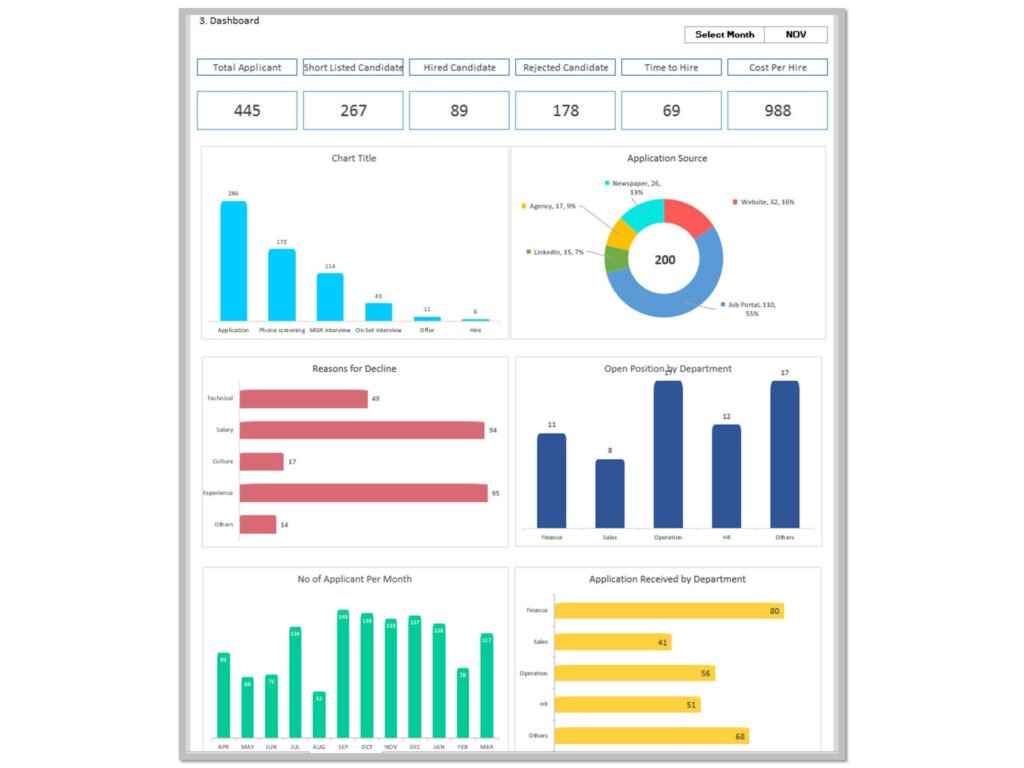
What Is a Recruitment Dashboard in Modern HR and Hiring Processes
A Recruitment Dashboard is a powerful analytics dashboard designed to track, manage, and optimize the entire recruitment process from job posting to final hire. In modern HR environments, this dashboard is a visual representation of recruitment data, allowing recruiters, hiring managers, and the HR team to monitor hiring performance in real time. A recruiting dashboard is a visual tool that consolidates hiring metrics, recruitment KPIs, and pipeline insights into one centralized platform.
The dashboard provides insights into recruitment activities such as open roles, candidate flow, and hiring stage progression. It captures recruitment data across all stages of the recruitment process, including sourcing, screening, interviewing, and offer acceptance. By visualizing these metrics, HR professionals can better understand recruitment performance and identify areas for improvement.
A recruitment analytics dashboard enables organizations to track key metrics like time to hire, offer acceptance rate, and conversion rate at each stage of the hiring process. This allows the recruitment team to stay on top of hiring needs and align recruitment strategies with business goals. Ultimately, the dashboard helps improve hiring decisions and supports efficient talent acquisition.
Why Organizations Use Recruitment Dashboard Excel and Dashboard Templates
Organizations widely adopt Recruitment Dashboard Excel solutions and dashboard templates because they offer a structured and customizable approach to managing recruitment data. A Recruitment Dashboard template allows HR teams to track recruitment metrics, monitor hiring data, and evaluate recruitment performance using a flexible format.
These dashboard examples demonstrate how HR teams can use recruiting dashboards to analyze the recruitment pipeline and track candidate movement through different recruitment stages. The dashboard simplifies complex recruitment activities into clear, visual insights that help recruiters and hiring managers understand performance at a glance.
Recruitment dashboards also help track specific recruitment metrics such as quality of hire, time to hire, and offer acceptance rate. Templates can be customized to include different types of dashboards such as recruitment funnel dashboards, candidate experience dashboards, and diversity dashboards. By using these templates, organizations can standardize recruitment reporting and improve data accuracy.
Additionally, dashboards allow HR teams to analyze external recruitment costs and recruitment marketing effectiveness. This helps organizations optimize recruitment strategies and improve overall hiring outcomes.
Role of HR Dashboard in Recruitment Analytics and Hiring Decisions
The HR Dashboard plays a central role in recruitment analytics and hiring decisions. A recruitment dashboard provides real-time insights into recruitment performance, enabling HR teams to make data-driven hiring decisions.
The dashboard allows recruiters and hiring managers to track recruitment KPIs and analyze hiring data across the entire recruitment process. It helps identify bottlenecks in the recruitment funnel and highlights stages of the recruitment process that require improvement.
For example, if the dashboard shows a low offer acceptance rate, HR teams can adjust their recruitment strategies or improve candidate experience. Similarly, if time to hire is too long, the dashboard helps identify delays in specific hiring stages.
Recruitment dashboards also help HR teams align recruitment efforts with organizational hiring needs. By providing insights into recruitment performance and hiring metrics, the dashboard enables HR professionals to optimize recruitment strategies and improve recruitment success.
Key Recruitment Metrics and KPIs in Recruitment Dashboard
Understanding Recruitment Metrics and Recruitment KPIs
Recruitment metrics and KPIs are critical indicators used to measure recruitment performance and hiring effectiveness. The Recruitment Dashboard allows HR professionals to track these metrics and evaluate the success of recruitment activities.
Common recruitment KPIs include time to hire, cost per hire, quality of hire, offer acceptance rate, and conversion rate. These metrics provide insights into the efficiency of the hiring process and help HR teams identify areas for improvement.
The recruitment metrics dashboard helps HR professionals track metrics related to candidate sourcing, screening, interviewing, and onboarding. By analyzing these metrics, HR teams can evaluate recruitment performance and improve hiring outcomes.
Recruitment KPIs also help organizations align recruitment strategies with business goals. By tracking these indicators, HR professionals can ensure that recruitment activities support organizational growth and workforce planning.
Tracking Hiring Pipeline and Recruitment Data Effectively
Tracking the recruitment pipeline is essential for managing the hiring process effectively. The Recruitment Dashboard includes a recruitment pipeline dashboard that allows HR teams to monitor candidate progress through each stage of the hiring process.
The dashboard shows how candidates move from application to final hire, providing insights into recruitment funnel performance. By analyzing recruitment data, HR professionals can identify bottlenecks in the hiring pipeline and take corrective action.
For example, if candidates drop off at a specific stage of the recruitment process, the dashboard helps identify the issue and improve candidate experience. Tracking recruitment data also helps HR teams manage open roles and ensure hiring needs are met.
Effective pipeline tracking ensures that recruiters and hiring managers can stay on top of recruitment activities and optimize the hiring process.
Monitoring Recruitment Performance Using KPI Dashboard
A KPI dashboard is an essential component of the Recruitment Dashboard. It provides HR teams with real-time insights into recruitment performance and hiring metrics.
The dashboard allows HR professionals to monitor key recruitment KPIs such as time to hire, quality of hire, and offer acceptance rate. These metrics help HR teams evaluate recruitment effectiveness and identify areas for improvement.
By using a KPI dashboard, organizations can track recruitment performance across different departments and hiring stages. This enables HR teams to make informed decisions and improve recruitment strategies.
Recruitment Analytics and Data-Driven Hiring
How Recruitment Analytics Improves Hiring Decisions
Recruitment analytics plays a vital role in improving hiring decisions by providing data-driven insights into recruitment performance. A recruitment analytics dashboard helps HR teams analyze recruitment data and identify trends that impact hiring outcomes.
By using analytics, HR professionals can evaluate recruitment efforts and adjust recruitment strategies to improve hiring efficiency. For example, analytics can help identify which recruitment channels produce the best candidates.
Recruitment analytics also helps HR teams evaluate candidate experience and improve hiring processes. By analyzing recruitment data, organizations can make better hiring decisions and achieve higher recruitment success.
Using Recruitment Data to Optimize Hiring Processes
Recruitment data is essential for optimizing hiring processes. The Recruitment Dashboard allows HR teams to analyze recruitment data and identify areas for improvement.
By tracking recruitment metrics, HR professionals can evaluate recruitment activities and adjust recruitment strategies accordingly. For example, the dashboard can help identify stages of the recruitment process that require improvement.
Using recruitment data effectively helps organizations streamline hiring processes and improve recruitment efficiency.
Benefits of Using Recruiting Dashboards for HR Teams
The benefits of using recruiting dashboards are significant for HR teams. Recruitment dashboards simplify recruitment reporting and provide real-time insights into recruitment performance.
These dashboards help HR teams track recruitment metrics, analyze hiring data, and improve recruitment strategies. They also enable HR professionals to monitor recruitment activities and ensure hiring processes align with business goals.
By using recruitment dashboards, organizations can improve hiring efficiency and achieve better recruitment outcomes.
Types of Recruitment Dashboards and Use Cases
Recruitment Metrics Dashboard for Hiring Performance Tracking
A recruitment metrics dashboard focuses on tracking hiring performance and recruitment KPIs. This type of dashboard allows HR teams to monitor recruitment activities and evaluate hiring outcomes.
Recruiting Dashboard for Candidate Pipeline Management
A recruiting dashboard is used to manage candidate pipelines and track recruitment stages effectively.
Hiring Dashboard for HR Recruitment Strategy
A hiring dashboard provides insights into recruitment strategies and hiring performance.
Recruitment Dashboard Examples and Best Practices
Recruitment Dashboard Example for Hiring Analytics
A recruitment dashboard example demonstrates how HR teams can track recruitment metrics and analyze hiring data.
Dashboard Examples for Recruitment Metrics and KPIs
Dashboard examples provide insights into how recruitment metrics dashboards are designed and used.
Best Practices for Using Recruitment Dashboard Templates
Best practices ensure recruitment dashboards provide accurate and meaningful insights.
Building a Recruitment Dashboard Template in Excel
Designing a Recruitment Dashboard Excel Template
Designing a recruitment dashboard template involves organizing recruitment data into structured formats.
Structuring Recruitment Metrics Dashboard and KPI Dashboard
Structuring metrics ensures dashboards provide accurate recruitment insights.
Creating Interactive Dashboards for Recruitment Analytics
Interactive dashboards enhance recruitment analysis and reporting.
Benefits of Recruitment Dashboard for HR Teams
Improving Hiring Efficiency and Recruitment Processes
Recruitment dashboards improve hiring efficiency by providing insights into recruitment activities.
Supporting Data-Driven Recruitment Decisions
Dashboards support data-driven recruitment decisions through analytics.
Enhancing Recruitment Analytics and HR Performance
Recruitment dashboards enhance HR performance by improving recruitment analytics.
Best Practices for Implementing Recruitment Dashboard
Selecting the Right Recruitment Metrics and KPIs
Selecting relevant recruitment metrics ensures effective dashboards.
Using Recruitment Dashboard Templates and Tools Effectively
Using templates improves recruitment reporting and analysis.
Optimizing Hiring Strategy with Recruitment Analytics Dashboards
Optimizing recruitment strategies ensures better hiring outcomes.
For ready-to-use Dashboard Templates: