
Overview of the Healthcare Dashboard Package
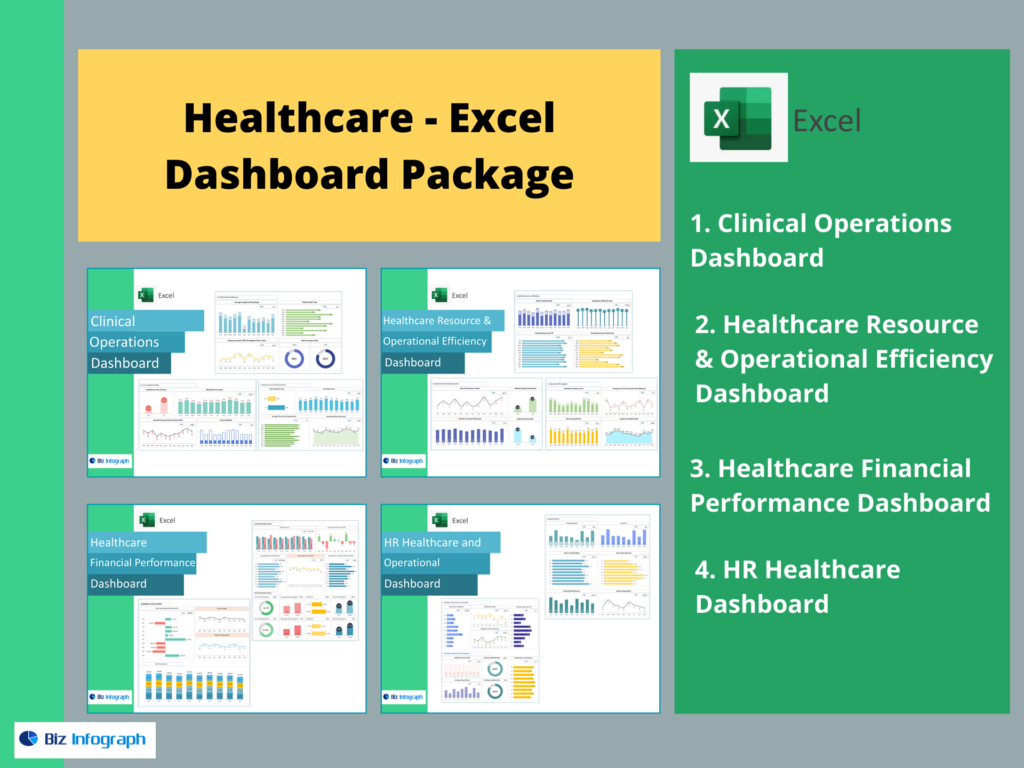
What a Healthcare Dashboard Is and How It Uses Healthcare Data
A healthcare dashboard is a centralized dashboard designed to collect, analyze, and visualize healthcare data from multiple systems into one unified view. In the modern healthcare industry, organizations generate vast volumes of clinical, operational, and financial data every day. A dashboard helps healthcare organizations transform this complex data into meaningful insights that support decision-making.
Healthcare dashboards consolidate dashboard data from electronic health records, financial systems, and operational platforms. By using healthcare analytics and data analytics, dashboards present key healthcare metrics in an intuitive format. This allows healthcare professionals and administrators to quickly understand performance trends, identify risks, and monitor outcomes across healthcare facilities. A well-designed dashboard is essential for improving efficiency, quality of care, and overall organizational performance.
Healthcare Dashboard Examples and Common Use Cases
Healthcare dashboard examples demonstrate how dashboards are used in real-world healthcare settings. Common examples include dashboards that track patient volumes, wait times, clinical outcomes, staffing levels, and financial performance. These examples help healthcare organizations explore examples of how dashboards support operational efficiency and clinical excellence.
Healthcare dashboards are used across hospitals, clinics, and healthcare systems to monitor performance and support compliance. By reviewing healthcare dashboard examples, organizations can identify the most relevant dashboard metrics and best practices. Examples also show how dashboards consolidate data and deliver insights that healthcare professionals and administrators can act on quickly.
Types of Healthcare Dashboards in Modern Healthcare
There are several types of healthcare dashboards, each serving a specific purpose. Common types include clinical dashboards, operational dashboards, and financial dashboards. Clinical dashboards focus on patient care and outcomes, operational dashboards monitor workflows and resource utilization, and financial dashboards track revenue, costs, and financial health.
Different dashboards are used across healthcare settings depending on organizational goals. Dashboards are purpose-built for healthcare to address the unique needs of providers, administrators, and executives. Understanding the types of healthcare dashboards helps organizations select the right solution for their specific healthcare environment.
KPIs, Metrics, and Performance Monitoring
Key Metrics and KPIs Tracked in a Healthcare Dashboard
Healthcare dashboards focus on key metrics and healthcare KPIs that reflect quality, efficiency, and financial sustainability. Common key healthcare metrics include patient wait times, bed occupancy, readmission rates, cost per patient, and revenue performance. These KPIs help healthcare administrators assess performance across clinical and operational domains.
A dashboard tracks these KPIs in real time, providing visibility into performance trends. By standardizing KPI definitions and visualizing them consistently, dashboards enable healthcare organizations to track progress against goals. Monitoring healthcare KPIs ensures alignment between operational activities and strategic objectives.
How Dashboards Monitor Healthcare Performance
Dashboards monitor healthcare performance by continuously updating and displaying key performance indicators. Performance dashboards provide real-time insights that allow healthcare professionals to respond quickly to emerging issues. Dashboards monitor metrics across healthcare facilities and departments, enabling comparative analysis and benchmarking.
By using dashboards, healthcare organizations can identify inefficiencies, quality gaps, and financial risks. Dashboards give healthcare leaders a clear view of performance across healthcare settings, supporting proactive management and continuous improvement.
Optimizing Healthcare Outcomes Using Dashboard Metrics
Dashboard metrics play a crucial role in optimizing healthcare outcomes. By analyzing trends in patient care, operations, and finance, dashboards help healthcare organizations improve decision-making. Dashboards make it easier to spot patterns and correlations that impact patient outcomes and operational efficiency.
Using dashboards supports data-driven decisions that enhance care delivery and resource allocation. Healthcare dashboards can help organizations optimize processes, reduce costs, and improve patient satisfaction. Metrics-driven optimization is essential for delivering high-quality, sustainable healthcare.
Clinical, Operational, and Financial Dashboards
Clinical Dashboards for Monitoring Patient and Care Metrics
Clinical dashboards focus on patient care and clinical outcomes. They track metrics such as patient flow, treatment outcomes, and quality indicators. Clinical dashboards support healthcare professionals by providing timely insights into patient status and care delivery.
Patient dashboards are often part of clinical dashboards, offering visibility into individual patient data. By consolidating clinical data, dashboards support evidence-based care and improve coordination across care teams. Clinical dashboards are essential tools for improving quality and safety in healthcare.
Operational Dashboards for Healthcare Operations
Operational dashboards monitor workflows, staffing, and resource utilization across healthcare facilities. These dashboards help healthcare administrators optimize operations and improve efficiency. Metrics such as appointment volumes, staff utilization, and throughput are commonly tracked.
Operational dashboards provide healthcare organizations with insights into daily operations and bottlenecks. By using dashboards, organizations can allocate resources more effectively and improve service delivery across healthcare settings.
Financial Dashboards for Healthcare Performance Management
Financial dashboards provide insights into healthcare finance, including revenue, expenses, and profitability. These dashboards track healthcare financial metrics and support budgeting, forecasting, and financial planning.
Healthcare financial dashboards help organizations monitor financial performance and ensure sustainability. By consolidating financial data into a single view, dashboards enable healthcare administrators to make informed financial decisions and manage costs effectively.
Dashboard Software and Technology
Healthcare Dashboard Software and Power BI Capabilities
Healthcare dashboard software provides the technical foundation for building and managing dashboards. Tools such as Power BI dashboards enable advanced data visualization, interactivity, and analytics. Power BI allows organizations to turn dashboard data into actionable insights through dynamic reports.
Healthcare organizations can use Power BI to integrate data into Power BI from multiple sources. This capability supports scalable, secure, and flexible dashboard solutions that meet the needs of modern healthcare.
Dashboard Software for Visualizing Healthcare Data
Dashboard software is essential for visualizing healthcare data effectively. It transforms raw data into charts, tables, and visual elements that are easy to interpret. Visualization helps healthcare professionals understand trends and patterns quickly.
By using dashboard software, organizations can build dashboards that support self-service dashboards and empower users to explore data independently. Visualization enhances transparency and improves engagement with healthcare analytics.
Choosing the Right Healthcare Dashboard Software
Choosing the right healthcare dashboard software requires evaluating functionality, scalability, and integration capabilities. Organizations should consider whether the software supports healthcare business intelligence, data security, and compliance requirements.
The right dashboard software integrates seamlessly with existing systems and supports building a dashboard tailored to specific healthcare needs. Selecting the right tool ensures long-term success and value.
Best Practices and FAQs
Best Practices in Healthcare Dashboard Design
Best practices in healthcare dashboard design emphasize clarity, relevance, and usability. Dashboards should focus on key healthcare metrics and avoid unnecessary complexity. A well-designed dashboard supports quick interpretation and decision-making.
Best practices include consistent KPI definitions, intuitive layouts, and role-based access. Dashboards built with best practices deliver reliable insights and support adoption across healthcare organizations.
Healthcare Dashboard FAQs for Healthcare Organizations
Healthcare dashboard FAQs address common questions about implementation, usage, and maintenance. FAQs often cover topics such as data sources, dashboard metrics, and dashboard software requirements.
By addressing frequently asked questions, healthcare organizations can better understand how dashboards support operations and analytics. FAQs help reduce uncertainty and encourage successful dashboard adoption.
How to Choose the Right Healthcare Dashboard Package
Choosing the right healthcare dashboard package involves aligning dashboard capabilities with organizational goals. Healthcare organizations should evaluate dashboard features, analytics capabilities, and integration options.
The right package supports clinical, operational, and financial needs while adhering to best practices in healthcare. A carefully selected dashboard package empowers healthcare organizations to improve performance and deliver better care.
Conclusion
A Healthcare Dashboard Package is a powerful solution for managing clinical, operational, and financial performance across healthcare organizations. By consolidating data, leveraging healthcare analytics, and providing actionable insights, dashboards support better decision-making and improved outcomes. As dashboards have become essential tools in the healthcare sector, choosing the right healthcare dashboard package enables organizations to deliver efficient, high-quality, and sustainable care.
For ready-to-use Dashboard Templates: